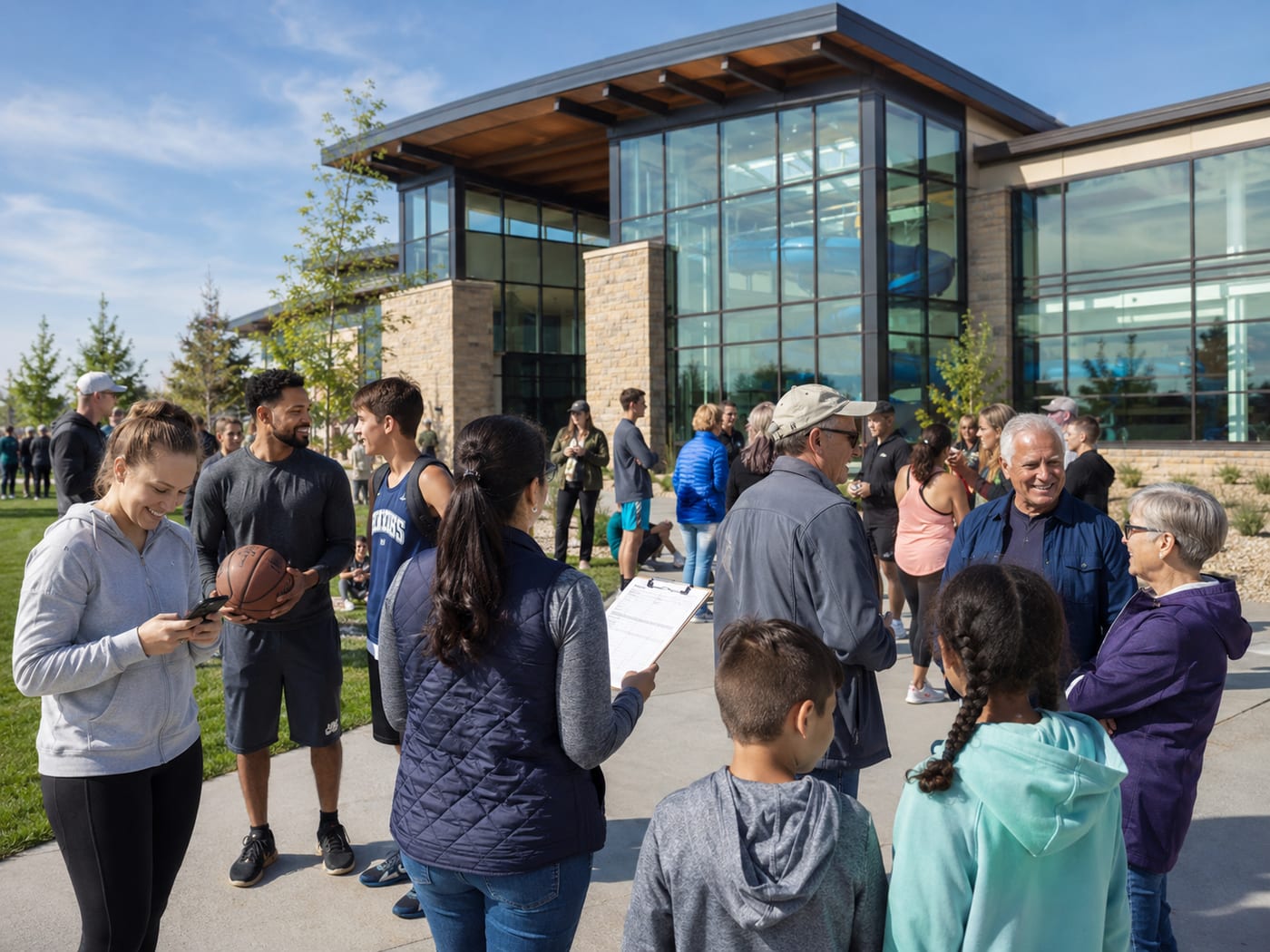
Rec Center
Five Months of Winter, Zero Indoor Recreation Facilities: Twin Falls' Seasonal Problem
TL;DR:
Twin Falls has outdoor parks, trails, and fields that work well from May through October. From November through March, average highs drop into the 30s, snow is possible in any of those months, and outdoor recreation capacity shrinks dramatically. The demand for recreation does not disappear in winter. It moves indoors, except Twin Falls has no public indoor recreation facility to absorb it. Neighboring Idaho cities of equal or smaller size solved this problem years ago. Twin Falls has not.
Twin Falls is not a city without recreation. It has more than 1,650 acres of parks and open space across 80 public areas. It has the Snake River Canyon, Dierkes Lake, trail systems, school athletic fields, and a city pool undergoing a $2 million-plus renovation. On a warm July evening, these spaces do their jobs.
The problem is not what Twin Falls has. It is when those resources stop being usable, and what happens to the roughly 57,325 residents who still want to stay active after October.
What Twin Falls winters actually look like
Twin Falls sits in a semi-arid, high-desert climate classified as BSk under the Köppen system, characterized by cold winters and hot summers with low precipitation year-round. The Twin Falls Area Chamber of Commerce reports average annual snowfall of 18 inches, with precipitation of some kind falling on roughly 79 days per year.
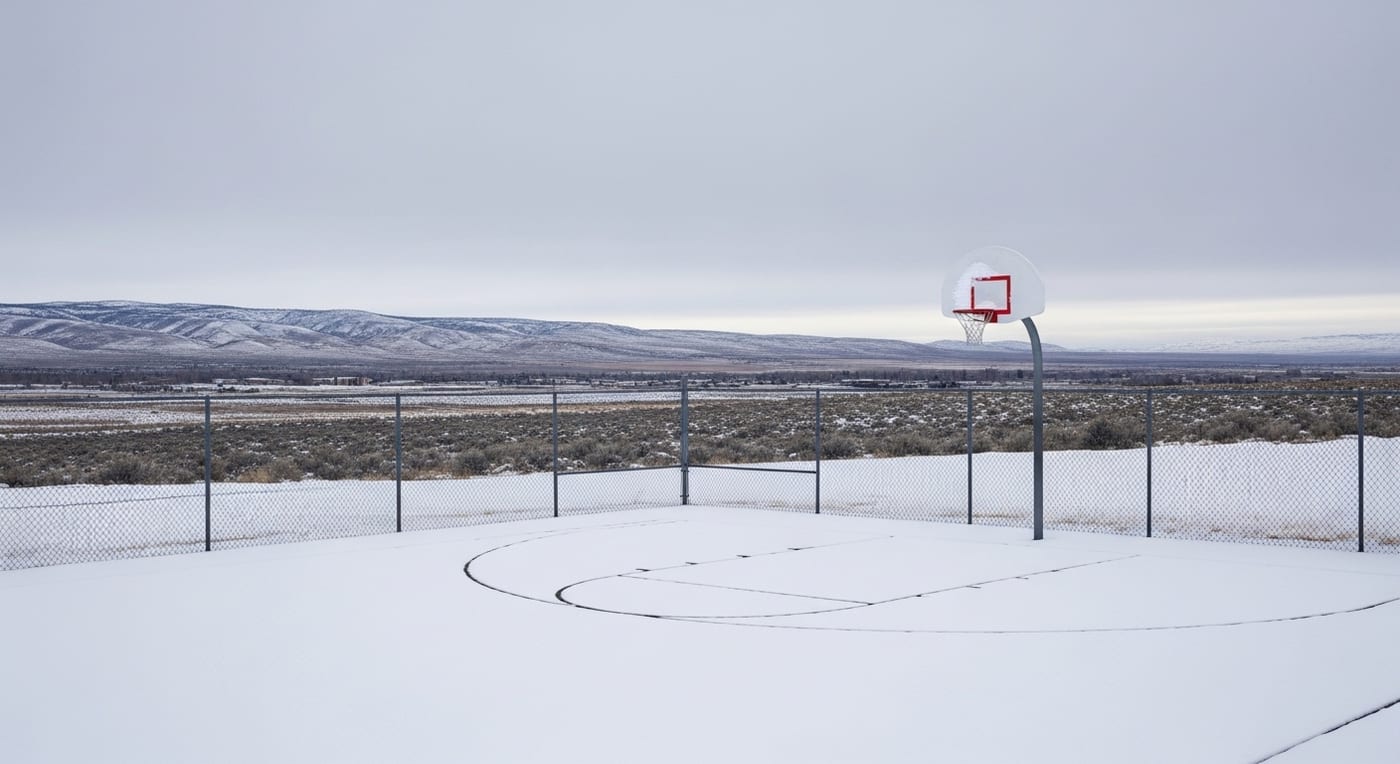
According to Weather Spark's climate analysis, Twin Falls winters are described as "very cold, snowy, and partly cloudy." Temperatures typically range from a low of 23°F in the coldest months to 90°F at the height of summer. Detailed monthly data shows that December through February, average highs hover between 34°F and 40°F, with overnight lows regularly dropping below 25°F. Snow is possible from November through April, a span of six months.
For practical purposes, outdoor recreation in Twin Falls is reliably comfortable from roughly May through October. November through March presents conditions that cancel practices, empty parks, close fields, and push residents indoors. That is five months of the year, more than 40 percent of the calendar, during which the city's outdoor recreation infrastructure is partially or fully offline.
The demand for recreation during those five months does not vanish. It relocates. The question is whether a city has somewhere for it to go.
Where the demand goes now
In a city with indoor recreation facilities, winter demand is absorbed. Courts stay busy. Pools stay warm. Walking tracks stay open. Programming shifts indoors without interruption. In Twin Falls, that absorption does not happen because the infrastructure does not exist.
What happens instead is a predictable set of workarounds that every Twin Falls family, coach, and league organizer recognizes.
Youth sports programs scramble for gym time at schools that were not designed to serve as community recreation facilities and whose primary obligation is to students and school-sponsored activities. Access is limited, inconsistent, and subject to cancellation. Coaches build schedules around borrowed space rather than reliable bookings.
Families who want their children in swim lessons, indoor soccer, basketball leagues, or group fitness during winter months drive to neighboring cities. Jerome, ten miles away, operates a 32,000-square-foot recreation center with a pool, courts, an indoor walking track, and group fitness classes, open 5 a.m. to 9 p.m. on most weekdays. A city of 13,000 residents is absorbing overflow demand from a city four times its size because the larger city has no comparable facility.
Seniors who need consistent indoor exercise to manage chronic conditions and reduce fall risk, needs that are well documented by the CDC and federal programs like Healthy People 2030, often simply stop being active during winter. The consequences of that five-month gap are not abstract. They show up in fall injuries, worsening chronic disease, and deepening social isolation.
Adults who belong to private gyms continue their routines, but at market rates that average $65 per month nationally. Those who cannot afford a private membership or who need programming beyond individual fitness (swimming, group classes, court sports, community events) have no public alternative in Twin Falls between November and March.
The infrastructure math
The seasonal argument is ultimately a capacity question, and the math is straightforward.
An outdoor recreation field or court in Twin Falls is reliably usable for roughly seven months of the year, from May through mid-November. Assuming an average of 10 usable hours per day over that span, an outdoor facility delivers approximately 2,100 hours of annual capacity. Weather cancellations, wind, extreme heat days, and early darkness in shoulder months reduce that number further, but 2,100 is a reasonable ceiling.
An indoor recreation facility operating 16 hours per day (a standard range for public rec centers, consistent with Jerome's 5 a.m. to 9 p.m. schedule), 360 days per year, delivers approximately 5,760 hours of annual capacity. That facility does not close for snow, does not cancel for wind, does not lose hours to darkness, and does not go dormant for five months.
The ratio is roughly 2.7 to 1. An indoor facility delivers nearly three times the usable capacity of an outdoor one in a climate like Twin Falls'. That does not mean outdoor recreation is less valuable. It means that a city relying primarily on outdoor infrastructure is operating at a fraction of its potential capacity for nearly half the year.
What comparable Idaho cities figured out
The seasonal infrastructure gap Twin Falls faces is not unique. Every Idaho city north of Boise deals with some version of winter-limited outdoor recreation. The difference is that most comparable cities addressed it years ago.
Pocatello, at roughly 57,000 residents, operates a Community Recreation Center and the Portneuf Wellness Complex. Both operate year-round, absorbing winter demand seamlessly.
Idaho Falls, at approximately 65,000 residents, runs two public recreation facilities: the IF Recreation Center and the Wes Deist Aquatic Center. Winter programming continues without interruption.
Nampa, at roughly 110,000 residents, has operated a 140,000-square-foot recreation center continuously since 1994. The facility covers 100 percent of its operating costs from user fees and has done so for more than thirty years.
Jerome, at roughly 13,000 residents, has operated its recreation center for decades. It is open year-round, and its winter programming serves not only Jerome residents but families from across the Magic Valley, including Twin Falls.
These cities did not build indoor facilities because they had unlimited budgets. They built them because their climates demanded year-round recreation capacity, and outdoor infrastructure alone could not deliver it. Twin Falls shares the same climate. It has not yet made the same investment.
The federal framework supports this
The seasonal access gap in Twin Falls aligns with a federal priority that most residents are not aware of.
The National Youth Sports Strategy, developed by the U.S. Department of Health and Human Services, was created with a specific goal: to increase youth engagement in communities with below-average sports participation and limited access to athletic facilities or recreational areas. The executive order behind the strategy explicitly emphasizes focusing investment on communities where facility access is limited.
Twin Falls qualifies on the access metric for indoor winter recreation. A city of 57,000 residents with no public indoor recreation facility is, by definition, a community with limited access to athletic facilities during the months when outdoor alternatives are not viable.
Separately, the Bipartisan Youth Sports Facilities Act, introduced with bipartisan support in both chambers of Congress, would create SBA-administered grants specifically for sports facility development, with priority funding directed toward rural and underserved communities. The legislation recognizes youth sports infrastructure as both a social investment and an economic development strategy.
Neither of these federal initiatives guarantees funding for any specific city. But they reflect a growing national consensus that facility access gaps, particularly in communities where climate limits outdoor alternatives, are a recognized infrastructure problem worth solving.
Where the conversation stands
A recreation center committee within the Twin Falls Parks and Recreation Department has been studying this question since 2017. In June 2025, the City Council voted to advance the long-stalled feasibility study. Parks and Recreation Director Wendy Davis said the council's vote "breathed a little bit of life into what I thought was a dying initiative."
The city pool, built in the 1980s, serves 60,000 users a year and is undergoing a major renovation expected to finish in mid-2026. That facility handles aquatics seasonally. It does not address the broader year-round indoor recreation gap.
A grassroots advocacy campaign has proposed naming a potential facility after U.S. Army Specialist Troy Carlin Linden, a soldier with the 54th Engineer Battalion who was killed in action on July 8, 2006, in Ar Ramadi, Iraq. The proposal comes from a Twin Falls resident who served in the same unit.
Closing
Twin Falls does not lack recreation space in July. It lacks recreation capacity in January. That distinction matters because it reframes the question from "does Twin Falls need more parks" to "does Twin Falls need year-round infrastructure."
The climate data, the capacity math, and the peer-city comparisons all point in the same direction. Every comparable Idaho city with a similar winter has solved this problem with indoor recreation facilities that operate 12 months a year. Twin Falls, the largest of them, has not.
Whether the city decides to build is a question for the council and the residents who weigh in over the coming year. What the seasonal data makes clear is that the gap is not a matter of preference. It is a structural limitation built into the calendar, and it grows five months wider every year it goes unaddressed.
Frequently Asked Questions
How cold does Twin Falls actually get in winter? Average highs in December through February range from 34°F to 40°F, with overnight lows regularly dropping below 25°F. Snow is possible from November through April. Weather Spark classifies Twin Falls winters as "very cold, snowy, and partly cloudy." For practical outdoor recreation purposes, reliable conditions exist from roughly May through October.
Why can't Twin Falls youth sports just use school gyms in winter? School facilities serve students and school-sponsored programming first. Community access is limited, inconsistent, and subject to cancellation when school needs take priority. Coaches and leagues cannot build reliable winter schedules around borrowed space. A dedicated recreation center provides purpose-built, year-round capacity with consistent booking.
Don't Twin Falls residents already drive to Jerome for indoor recreation? Many do, and that is part of the problem. Jerome, with roughly 13,000 residents, operates a recreation center that absorbs overflow demand from a city four times its size. The ten-mile drive is manageable for some families, but it adds time, fuel cost, and scheduling complexity, and it is not a viable option for seniors, low-income residents, or families without reliable transportation.
How do indoor facilities compare to outdoor ones in terms of usable hours? In a climate like Twin Falls', an outdoor field or court is reliably usable for roughly seven months (May through mid-November), delivering approximately 2,100 usable hours per year. An indoor facility operating 16 hours a day, 360 days a year delivers approximately 5,760 hours, nearly three times the capacity regardless of weather.
What Idaho cities comparable to Twin Falls already have indoor recreation centers? Pocatello (roughly 57,000 residents), Idaho Falls (roughly 65,000), Nampa (roughly 110,000), and Jerome (roughly 13,000) all operate public indoor recreation facilities year-round. Twin Falls, at 57,325 residents, is the notable exception among Idaho cities of its size.
Is Twin Falls actively considering a recreation center? A city committee has been studying the question since 2017. In June 2025, the City Council voted to advance the feasibility process. No specific site, cost, or funding mechanism has been finalized as of this writing.
Where can residents follow the conversation? Twin Falls City Council meetings are open to the public, and the Parks and Recreation Department posts updates on the city's official website. A community advocacy group is also tracking the issue at twinfallsreccenter.com.