Rec Center
Where Would the Rec Center Go? Here Is What We Know.
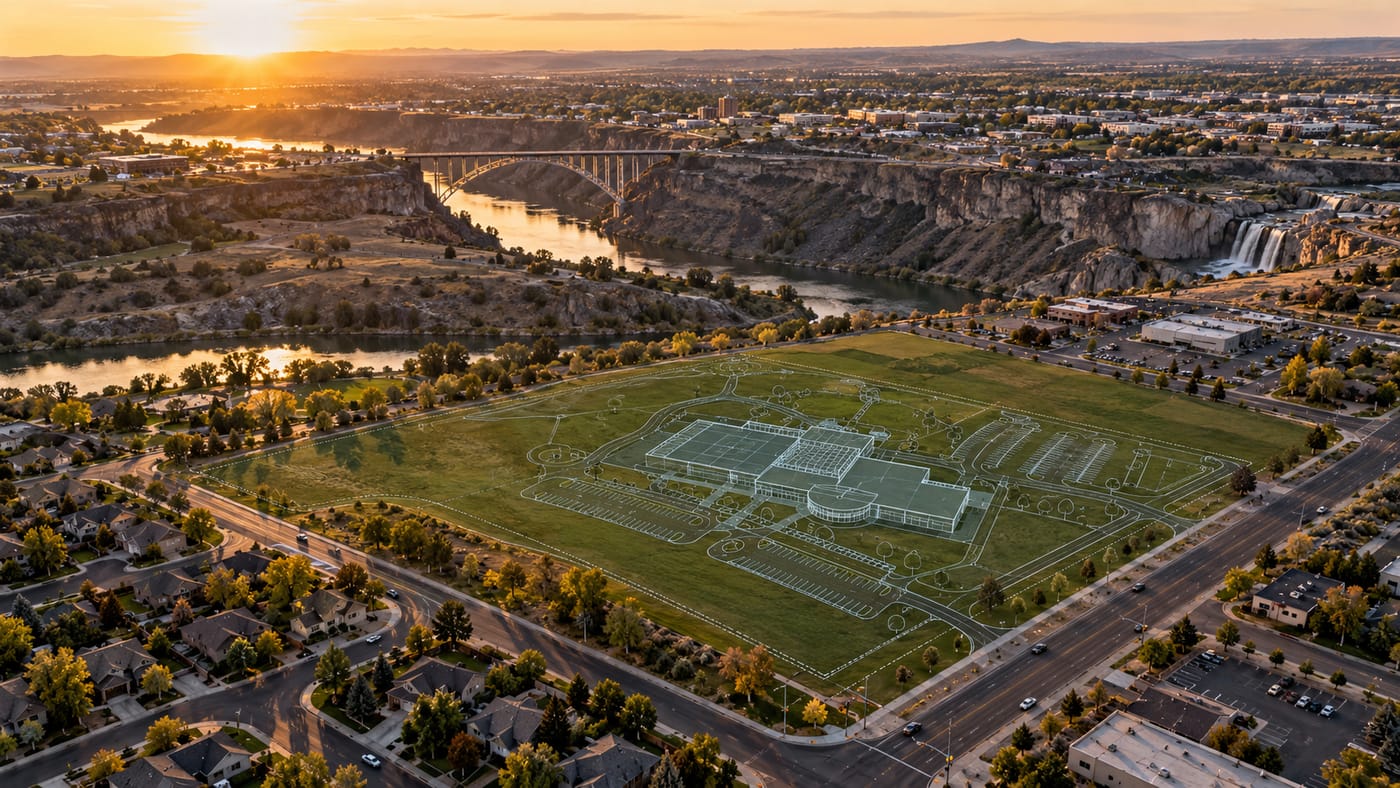
TL;DR: No site has been selected. No design has been approved. No timeline has been set. These are honest answers, and they are honest because the project is in the phase where those decisions get made, not after them. The feasibility study the City Council advanced in June 2025 is the process that answers these questions: what goes in the building, where it goes, and how it gets funded. This post explains what that process involves, what factors drive site selection, what comparable cities’ timelines looked like, and where Twin Falls residents can follow the decisions as they happen.
The Twin Falls recreation center conversation has produced 38 blog posts, a community petition, a feasibility study, and a growing base of community support. If you have followed any of it, you probably have one of two questions that none of the previous posts have directly answered:
Where would it go?
How long would it take?
The honest answer to both is: it has not been decided yet. But that is not the same as “nobody knows.” The feasibility study is the process designed to produce those answers, and understanding how it works helps residents follow the decisions that are coming.
Where the project stands right now
Parks and Recreation Director Wendy Davis described the current phase in a KIVI-TV report: “As part of the feasibility study, the questions that we need to answer are the kind of spaces that would go in it, as well as where it needs to go so that we can come up with a funding plan.”
That quote describes the three decisions the feasibility study is designed to make:
What goes in it. The amenities blog documented the features that make recreation centers work: multi-court gymnasium, dedicated pickleball courts, indoor track, fitness center, senior wellness area, climbing wall, multipurpose rooms, and potentially aquatics. The feasibility study determines which of these features are included in the Twin Falls facility based on community input, available budget, and site constraints.
Where it goes. Site selection is a separate analysis driven by factors specific to Twin Falls’ geography, infrastructure, and community access patterns. No site has been announced, and the decision involves considerations that this post will explain.
How it gets funded. The funding blog documented the tools available: Certificates of Participation, charter memberships, naming rights, grants, and other mechanisms that do not require a tax increase. The feasibility study determines which combination of tools fits Twin Falls’ specific financial situation.
These three decisions are interconnected. The site affects the cost. The cost affects which amenities are included. The amenities affect projected revenue. The revenue affects which funding mechanisms are viable. The feasibility study works through all of these simultaneously.
What goes into site selection
For residents wondering “where would it go,” the factors that drive site selection for a community recreation center are practical, not political. Here is what comparable cities have considered.
Acreage. A recreation center of the scale discussed for Twin Falls typically requires 10 to 15 acres. That includes the building footprint, parking, outdoor amenities (fields, playgrounds, walking paths), and room for future expansion. Nampa’s facility sits on 13 acres donated by Mercy Medical Center.
Access and visibility. The site should be easily reachable from major roads and visible to daily traffic. A facility that people drive past regularly stays top-of-mind. A facility hidden behind an industrial park does not. Proximity to the Blue Lakes Boulevard corridor, which carries the highest volume of retail and hospitality traffic in Twin Falls, would benefit both the facility and nearby businesses.
Proximity to schools. The after-school blog documented that the 3-to-6 p.m. window is the highest-demand period for youth access. If a rec center is within walking distance of a middle school or high school, students can walk there after school without needing a ride. That proximity directly affects daily youth utilization.
Hotel infrastructure. The tournament hosting case depends on visiting teams booking hotel rooms. A site reasonably close to Twin Falls’ hotel corridor makes tournament logistics simpler for visiting families and maximizes the economic impact of event weekends.
Utilities and infrastructure. A facility of this scale requires water, sewer, electrical, and gas infrastructure capable of supporting a large public building with aquatics, HVAC, and high daily foot traffic. Sites with existing utility access reduce construction costs. Sites that require significant infrastructure extension add cost and time.
Land availability and cost. In some communities, land is donated. Nampa’s site was donated by Mercy Medical Center. In others, the city purchases land at market rates. In others, the city uses publicly owned land it already holds. The availability of suitable parcels in Twin Falls and their acquisition cost are factors the feasibility study evaluates.
Accessibility. A public facility must be ADA-compliant and accessible by multiple transportation modes: car, walking, biking, and ideally public transit. The site should be reachable from across the Magic Valley service area without requiring residents from Jerome, Filer, or Kimberly to navigate through congested residential areas.
Community input. Residents have opinions about where the facility should go, and those opinions matter. A site that the community supports is a site that the community uses. The feasibility process includes public input opportunities where residents can weigh in on location preferences.
What the typical timeline looks like
There is no standard timeline for a recreation center project because every community’s process is different. But the phases are consistent, and the timelines from comparable projects provide a reasonable frame of reference.
Phase 1: Feasibility study (6 to 18 months). This is where Twin Falls is now. The study answers what goes in the building, where it goes, and how it gets funded. It includes community surveys, site evaluation, cost modeling, revenue projections, and a financial plan. The output is a recommendation to the city council on whether and how to proceed.
Phase 2: Community engagement and decision (3 to 12 months). The feasibility study produces a recommendation. The council and the community evaluate it. If the funding mechanism requires public input (a bond, a recreation district formation, or a charter membership campaign), that engagement happens in this phase. The phase ends with a council vote to proceed or not.
Phase 3: Design and engineering (12 to 18 months). An architectural firm designs the facility based on the feasibility study’s programming recommendations. The design goes through community review, engineering evaluation, permitting, and final approval. This phase produces the construction documents.
Phase 4: Construction (18 to 24 months). The building goes up. A facility of this scale typically takes 18 to 24 months from groundbreaking to opening day, depending on weather, supply chain conditions, and construction complexity.
Phase 5: Opening and ramp-up (3 to 6 months). The facility opens with initial programming. Membership sales ramp up. Charter memberships purchased during Phase 2 convert to active accounts. Programming expands as demand patterns emerge.
Total estimated timeline from feasibility start to doors open: 4 to 6 years.
That range is wide because it depends on how quickly decisions are made, how the funding mechanism is structured, and whether complications arise during site acquisition, design, or construction.
For reference, Nampa conceptualized its recreation center in the early 1990s and opened in 1994, a roughly two-to-four-year process from commitment to opening. Nampa moved quickly because the land was donated, the COPs were assembled efficiently, and charter memberships demonstrated demand before construction began.
Twin Falls’ timeline depends on how quickly the community and the council move through each phase. The feasibility study is phase one. It is happening now.
What residents can do during this phase
The feasibility phase is when community input carries the most weight. Once a project moves into design and construction, the major decisions have been made. Right now, the decisions are open.
Signing the petition demonstrates community demand. Contacting city council members tells elected officials that residents are watching and engaged. Attending city council meetings puts faces in the room during public comment. Sharing information with neighbors expands the base of informed residents who can participate when the next decision point arrives.
The previous blog explained each of these steps in detail. The short version: documented community demand is what moves a civic project from study to action. The documentation is happening now.
What we do not know yet
Honesty matters more than optimism in a civic conversation. Here is what has not been decided as of this writing:
No site has been selected or announced. No architectural design has been created. No funding mechanism has been finalized. No construction timeline has been set. No bond, levy, or tax measure has been proposed. No specific cost estimate has been published by the city.
These are not failures. They are the normal state of a project in the feasibility phase. The feasibility study exists to produce these answers. Announcing them before the study is complete would be premature and would bypass the community input process that gives the decisions legitimacy.
What we do know is that a city committee has been studying this question since 2017. That the City Council voted in June 2025 to advance the feasibility study. That Parks and Recreation Director Wendy Davis is leading the process. That Nampa and Jerome have proven the model works in Idaho. That the funding tools exist to build without a tax increase. And that the community support is growing.
The answers to “where” and “how long” are coming. They come from the feasibility study. And the feasibility study is underway.
Where the conversation stands
A recreation center committee within the Twin Falls Parks and Recreation Department has been studying this question since 2017. In June 2025, the City Council voted to advance the long-stalled feasibility study. Parks and Recreation Director Wendy Davis said the council’s vote “breathed a little bit of life into what I thought was a dying initiative.”
A grassroots advocacy campaign has proposed naming the potential facility after U.S. Army Specialist Troy Carlin Linden, a soldier with the 54th Engineer Battalion who was killed in action on July 8, 2006, in Ar Ramadi, Iraq. The proposal comes from a Twin Falls resident who served in the same unit.
Closing
“Where would it go?” and “how long would it take?” are the right questions. They are the questions that move a conversation from abstract to concrete. They deserve honest answers.
The honest answers are: the feasibility study will determine the site, and comparable projects take four to six years from feasibility to opening day. No site has been selected. No timeline has been set. The process that produces both is underway.
For a community that has been discussing this since 2017, the answer to “how long” may be frustrating. Nine years have already passed. But the difference between the first eight years and right now is that the City Council has voted to advance, the feasibility study has a mandate, and the community is organized, documented, and engaged in a way it was not before.
The questions have answers. The process that produces them is running. What happens next depends on whether the community stays at the table while the answers take shape.
Frequently Asked Questions
Has a site been selected for the rec center?
No. Site selection is part of the feasibility study currently underway. No location has been announced or finalized.
How long does it take to build a rec center?
From feasibility study to opening day, comparable projects typically take four to six years. The phases include feasibility (6-18 months), community engagement and decision (3-12 months), design and engineering (12-18 months), and construction (18-24 months).
What factors determine where the rec center goes?
Key factors include available acreage (10-15 acres), road access and visibility, proximity to schools, nearby hotel infrastructure for tournament hosting, utility access, land cost or donation potential, ADA accessibility, and community input.
Is there a cost estimate?
No specific cost estimate has been published by the city. The feasibility study will produce cost projections based on the selected site, facility size, and included amenities.
Can the community influence where it goes?
Yes. The feasibility process includes community input opportunities. Signing the petition, contacting council members, and attending public meetings are the most direct ways to participate while decisions are being made.
Is Twin Falls actively considering a recreation center?
A city committee has been studying the question since 2017. In June 2025, the City Council voted to advance the feasibility process. The study is underway.
Where can residents follow the conversation?
Twin Falls City Council meetings are open to the public, and the Parks and Recreation Department posts updates on the city’s official website. A community advocacy group is also tracking the issue at twinfallsreccenter.com.


