Rec Center
What Makes a Rec Center Work: The Amenities That Matter
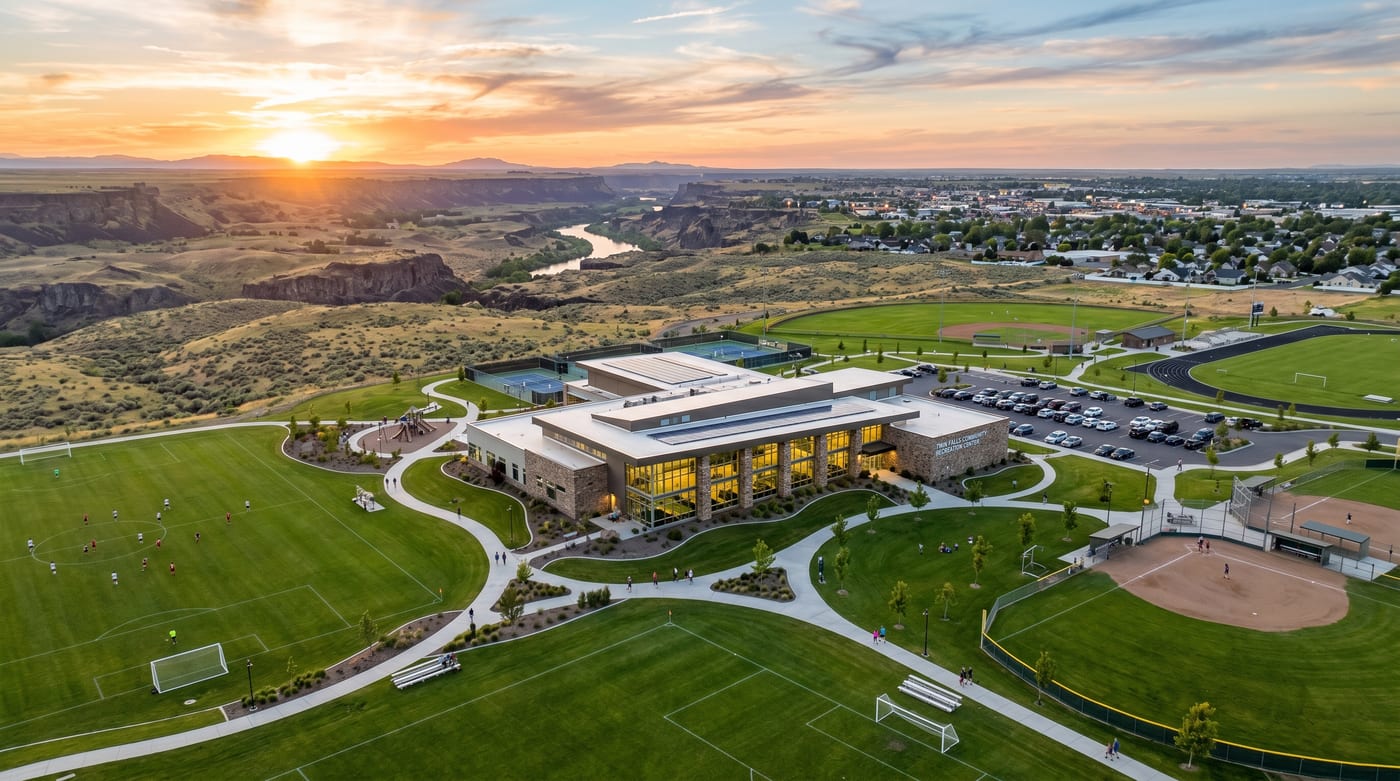
TL;DR: Not every recreation center succeeds. The ones that do share a common set of features designed to serve the widest possible cross-section of a community, not just athletes, not just fitness enthusiasts, but families, seniors, youth, and residents of every age and ability. This post breaks down the core amenities that drive daily use, membership retention, and long-term financial sustainability at recreation centers across the country, and explains why each one matters for a community like Twin Falls.
A recreation center is not a gym with a bigger parking lot. The facilities that sustain themselves for thirty years without taxpayer subsidy do so because every room, every court, and every feature in the building serves a purpose tied to a specific community need. Nothing is decorative. Everything earns its square footage.
The question for any city considering a recreation center is not just "what should we build" but "what features actually drive the daily use, the memberships, and the revenue that keep the doors open decade after decade." The evidence from comparable communities is clear on what works and why.
Multi-court gymnasium
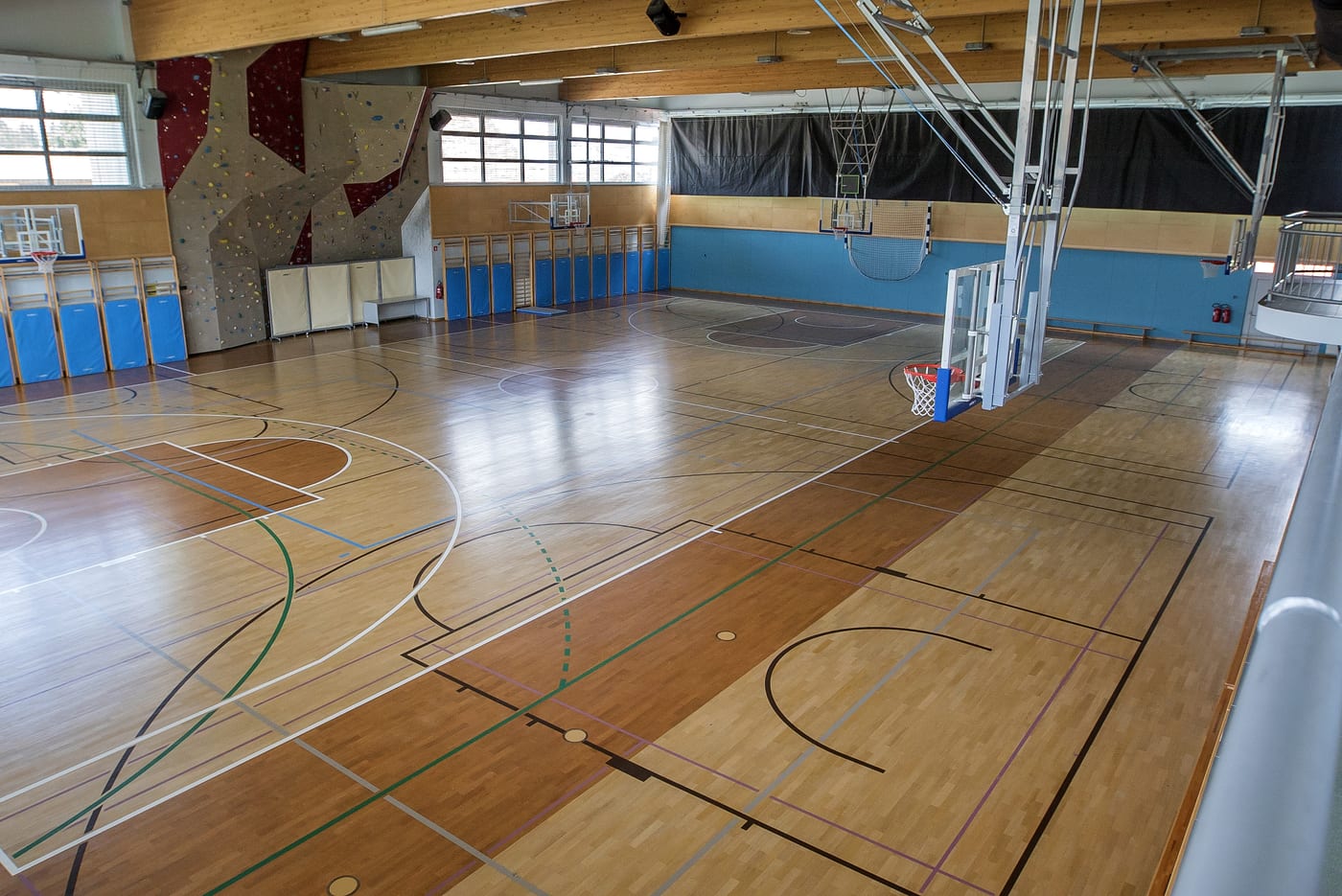
This is the centerpiece of any recreation center, and the feature that generates the most diverse programming revenue.
A gymnasium with four or more convertible courts serves basketball leagues on Monday, volleyball on Tuesday, wrestling invitationals on a Saturday in January, futsal on Wednesday evenings, cheerleading showcases on a Saturday in March, and dodgeball open play on a Thursday night. The same floor space hosts eleven different sports across twelve months because the courts convert between configurations.
For Twin Falls, a multi-court gymnasium addresses the most fundamental infrastructure gap the city has: there is no public indoor space where youth leagues can reliably book court time, where coaches can run practices without borrowing school gyms subject to cancellation, or where regional tournaments can be hosted that bring visiting families and their spending into the Magic Valley.
The gymnasium is also where after-school open gym happens every weekday afternoon, where drop-in pickup games form spontaneously, and where birthday parties run on Saturday afternoons. It is the room that never sits empty because it serves a different community every hour of the day.
Dedicated pickleball courts
Pickleball is the fastest-growing sport in America, with 19.8 million players and 311 percent growth in three years. It is also the only major sport where a 25-year-old and a 75-year-old compete in the same game through age-bracketed tournament divisions.
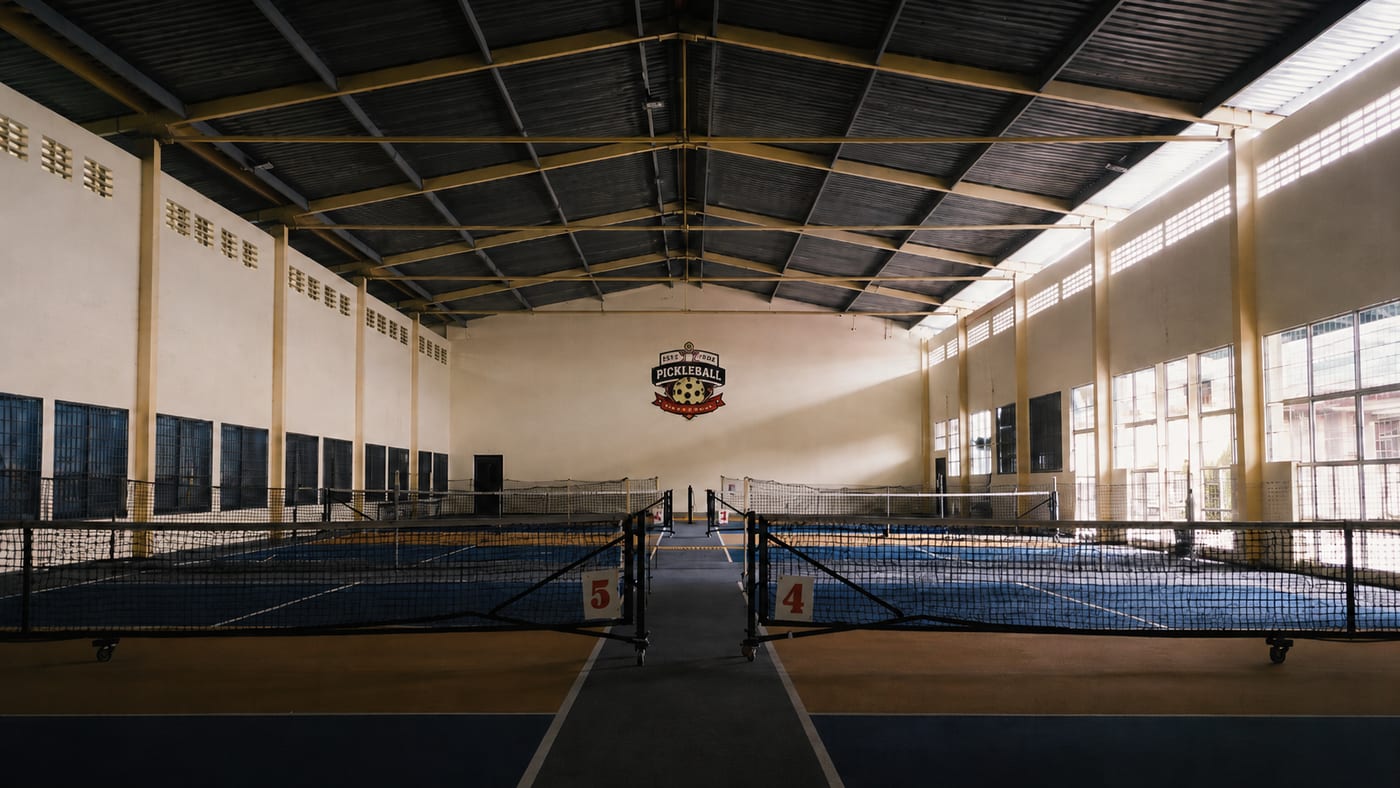
Dedicated courts matter because pickleball cannot efficiently share gymnasium time with basketball and volleyball the way those sports share with each other. Permanent pickleball courts operate independently from the main gymnasium, meaning pickleball programming runs simultaneously with whatever the gym is hosting. Early-morning pickleball regulars play while the gymnasium is being set up for a basketball league. Weekend pickleball tournaments run while a wrestling invitational occupies the main courts.
For Twin Falls, dedicated pickleball courts serve the senior population with a low-impact, high-social competitive sport, the growing adult recreational market, and the multi-generational community that makes pickleball unique among facility offerings.
Indoor track
An indoor walking and running track is one of the simplest features in a recreation center and one of the most consistently used.
For Twin Falls, where outdoor recreation is offline for five months due to cold, snow, and ice, an indoor track provides the one thing walkers and runners need most: a flat, climate-controlled, safe surface available every day of the year regardless of weather.
The primary users are seniors. The retired couple who walks twelve laps three mornings a week is the single most reliable daily user at any recreation center with a track. These are the members who renew without being asked because the track is woven into their weekly routine.
But the track also serves runners training through winter, parents walking with strollers during daytime hours, and physical therapy patients rebuilding mobility on a predictable surface. It is one of the lowest-cost features to build and maintain, and one of the highest-value features for membership retention.
Fitness center and exercise studios
The fitness center (cardio equipment, weight machines, free weights) and group exercise studios are where adult memberships are earned and retained.
A fitness center serves the solo exerciser who wants a weight room and 45 minutes with a barbell. The exercise studios serve the group fitness crowd: yoga at 6 a.m., cycling at noon, Zumba at 5:30, HIIT at 7 p.m. Together, they replace the $65-per-month private gym membership with a family membership that covers the entire household for less.
For Twin Falls, this is the feature that competes most directly with existing private gyms, and the evidence from comparable cities shows the two coexist without cannibalizing each other. Private gyms serve individual fitness at market rates. A recreation center fitness offering serves families at community rates, with courts, a track, youth programming, and senior wellness included in the same membership. Different value propositions. Different customer bases.
Senior wellness area
A dedicated space for older adult programming is not an add-on. It is a core revenue and community health feature.
Twin Falls has roughly 8,967 residents over 65. That population currently has no public facility offering evidence-based wellness programming: structured fitness classes, fall prevention programming, balance and strength training, and the consistent social contact that the Surgeon General's advisory identifies as critical for combating isolation.
Senior members are among the most consistent daily users at every recreation center that serves them. They show up. They renew. They bring friends. The dedicated wellness area ensures their programming is not displaced by youth sports or general fitness scheduling. It gives older adults a space that is designed for their needs, staffed with instructors trained in senior physiology, and scheduled at times that work for their routines.
Comparable Idaho cities including Pocatello, Idaho Falls, and Nampa all operate senior programming through their recreation centers. Nampa's facility includes a dedicated Senior Center wing that opened five months after the main building in 1994 and has operated continuously since.
Youth programs and child watch
Youth programming is what makes families join. After-school access is what makes them stay. Break-week camps are what makes them tell their neighbors.
A recreation center with structured youth programs (sports leagues, martial arts classes, cheer and dance, summer camps) gives Twin Falls families an affordable alternative to private providers that charge $100 to $300 per month per child for similar programming.
Child watch, the supervised playroom where parents drop children under 6 while they work out, is the feature that makes every other adult feature usable for parents of young children. A mom cannot attend a 6 a.m. yoga class if she has a toddler and no childcare. Child watch solves that problem within the building, at no or minimal additional cost, and makes the membership worth it for the parent and the child simultaneously.
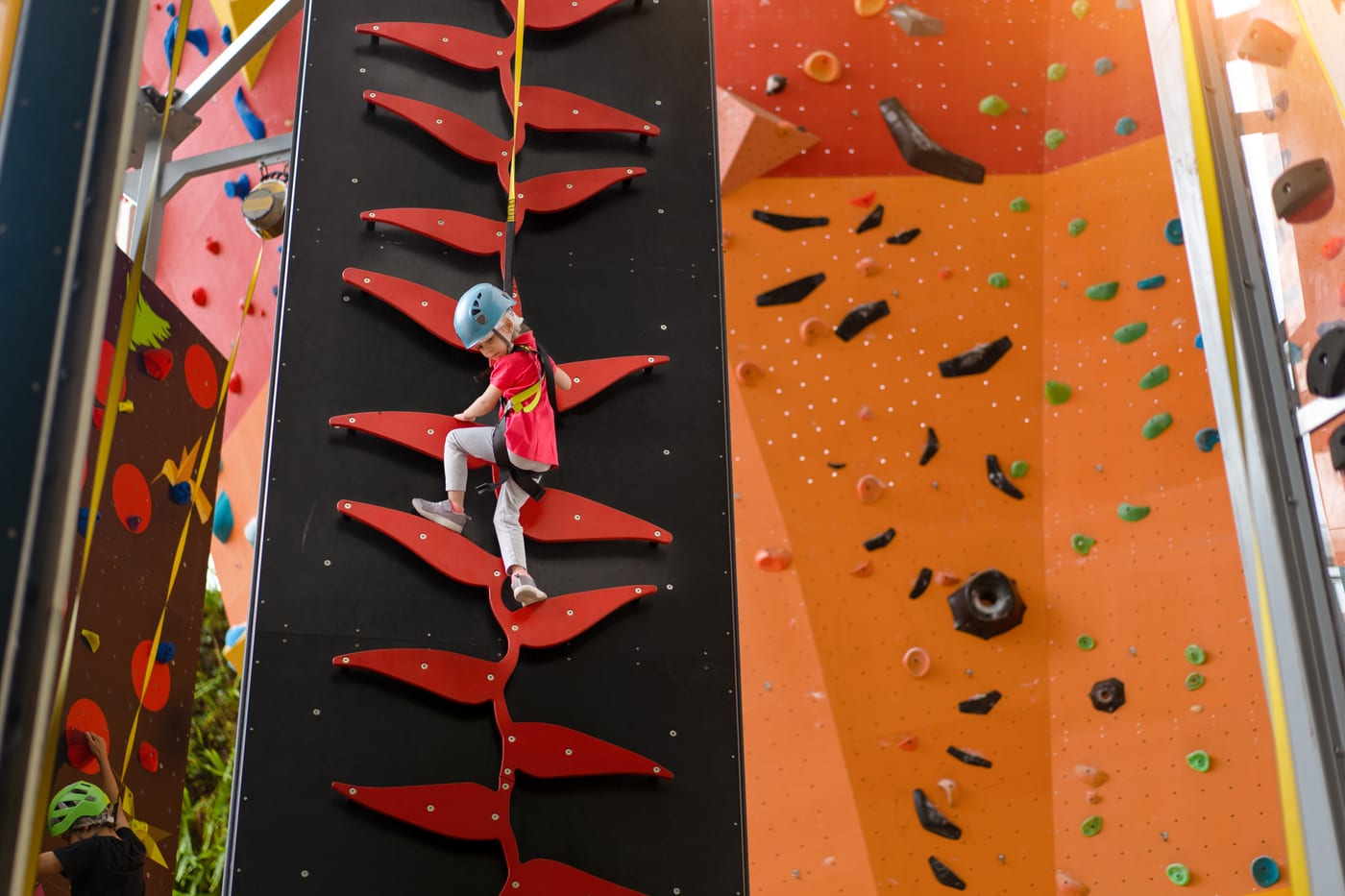
Climbing wall
A climbing wall is not the reason a city builds a recreation center. It is the reason a 9-year-old begs to go back.
Climbing serves kids who do not connect with team sports. It builds problem-solving, controlled risk-taking, and visible personal progress in ways no court sport replicates. It is the most popular birthday party format at every recreation center that offers one. It serves as a rotation station during summer camps and an after-school activity for drop-in use.
The cost of including a climbing wall ($50,000 to $150,000 installed) is a fraction of the overall facility budget. The revenue it generates through birthday party bookings, youth clinics, group rentals, and the membership value it adds typically exceeds its operating costs within the first year.
Multipurpose rooms and event space
The rooms that are not the gymnasium are where the facility becomes a community center rather than a sports facility.
Multipurpose rooms host senior tai chi on Monday morning, youth martial arts on Wednesday afternoon, table tennis on Tuesday evening, a church group on Wednesday night, a corporate wellness workshop on Thursday, a birthday party on Saturday, and a community meeting on Sunday. All in the same rooms. All without conflicting with a single gymnasium event.
For Twin Falls, multipurpose rooms fill the gap the city currently has in affordable, accessible, publicly owned community gathering space. Churches, nonprofits, scout troops, neighborhood associations, and families looking for event venues all benefit from spaces that rent at modest hourly rates and accommodate a wide range of uses.
Rental fees from these rooms generate consistent revenue during hours when the gymnasium is not hosting events, contributing to the diversified revenue model that makes recreation centers financially sustainable.
Aquatics
Indoor aquatic facilities, including lap pools, leisure pools, and therapeutic water features, serve the broadest demographic range of any single amenity in a recreation center.
Youth swim lessons teach water safety skills the CDC identifies as the most effective drowning prevention intervention. Lap swimming serves fitness swimmers and competitive athletes year-round. Water aerobics is among the most consistently attended senior programming at every facility that offers it. Therapeutic warm-water access serves adults and seniors managing arthritis, recovering from surgery, or dealing with chronic pain. Adaptive aquatics provides wheelchair-accessible pool entry for residents with disabilities.
Twin Falls' city pool, built in the 1980s, serves 60,000 users per year seasonally. An indoor aquatic facility extends that access to twelve months, covering the five-month winter window when the outdoor pool is closed and families currently have no local option.
Aquatics is also one of the strongest revenue categories: swim lessons, lap memberships, water aerobics fees, swim team lane rentals, and swim meet hosting all contribute to the facility's financial sustainability. Nampa's recreation center operates five indoor pools as part of the revenue model that has sustained the facility for three decades.
Why these features work together
No single amenity sustains a recreation center. The gymnasium alone does not generate enough revenue. The fitness center alone does not serve enough of the community. The track alone does not justify the building.
What makes a recreation center work is the combination. A family joins because the membership covers the parent's fitness class, the teenager's after-school basketball, the 7-year-old's climbing wall access, the grandmother's morning track walk, and the birthday party in the multipurpose room. One membership. One monthly payment. Every feature under one roof.
That breadth is what produces the daily-use habits that sustain memberships. It is what fills the building from 6 a.m. to 10 p.m. every day of the week. It is what makes a recreation center not just a sports facility but essential community infrastructure that a city cannot imagine living without once it exists.
For Twin Falls, a city of 57,325 residents serving a Magic Valley region of 122,000 or more, the question is not whether these features work. Comparable Idaho cities have proven they do. The question is whether Twin Falls is ready to join them.
Where the conversation stands
A recreation center committee within the Twin Falls Parks and Recreation Department has been studying this question since 2017. In June 2025, the City Council voted to advance the long-stalled feasibility study. Parks and Recreation Director Wendy Davis said the council's vote "breathed a little bit of life into what I thought was a dying initiative."
A grassroots advocacy campaign has proposed naming a potential facility after U.S. Army Specialist Troy Carlin Linden, a soldier with the 54th Engineer Battalion who was killed in action on July 8, 2006, in Ar Ramadi, Iraq. The proposal comes from a Twin Falls resident who served in the same unit.
Closing
A recreation center works when every feature in the building earns its space. Courts that convert between sports. A track that fills every morning. Studios that run classes from dawn to evening. Multipurpose rooms that host a different community every day. A climbing wall that makes kids beg to come back. A senior area that keeps older adults active, connected, and out of the emergency room.
None of these features work in isolation. All of them work together. And in the communities that have built them, they work for decades.
Frequently Asked Questions
What amenities do successful recreation centers typically include? The core features include a multi-court gymnasium, dedicated pickleball courts, an indoor track, a fitness center with exercise studios, a senior wellness area, youth programming and child watch, a climbing wall, multipurpose rooms, and aquatic facilities. The combination of features is what drives daily use and financial sustainability.
Why do recreation centers need dedicated pickleball courts? Pickleball cannot efficiently share gymnasium time with basketball and volleyball. Dedicated courts allow pickleball to operate simultaneously with gymnasium sports, maximizing facility utilization and serving the fastest-growing sport in America without scheduling conflicts.
What makes multipurpose rooms important? They serve every community the gymnasium does not: senior fitness, martial arts, table tennis, church groups, birthday parties, corporate events, community meetings, and cultural celebrations. They generate rental revenue during hours when athletic programming is lighter.
Can a recreation center with all these features sustain itself financially? Yes. The Nampa Recreation Center includes all of these features and has covered 100 percent of its operating costs from user fees for more than thirty years. The breadth of programming is what makes the revenue model work.
Is Twin Falls actively considering a recreation center? A city committee has been studying the question since 2017. In June 2025, the City Council voted to advance the feasibility process. No specific site, cost, or funding mechanism has been finalized as of this writing.
Where can residents follow the conversation? Twin Falls City Council meetings are open to the public, and the Parks and Recreation Department posts updates on the city's official website. A community advocacy group is also tracking the issue at twinfallsreccenter.com.