Rec Center
A Rec Center Is Not a Gym. Here Is What Makes Them Different.
TL;DR: Twin Falls has private gyms. They serve individual fitness well. What they do not offer is basketball courts, volleyball courts, an indoor track, a climbing wall, pickleball courts, youth programming, after-school access, senior wellness, summer camps, birthday party hosting, community event space, multipurpose rooms, group fitness included in a family membership, or a single monthly payment that covers every member of a household. A recreation center includes all of it. The two models serve different purposes, different populations, and different needs. They coexist in every city that has both, and they would coexist in Twin Falls.
The most common response when the Twin Falls recreation center conversation comes up is some version of: "We already have gyms. Why do we need a rec center?"
It is a fair question. Twin Falls does have private gyms. Some of them are well-run, well-equipped, and serve their members effectively. Nobody involved in the recreation center conversation is arguing that private gyms should close or that they do a bad job at what they do.
The argument is that what they do and what a recreation center does are fundamentally different things. Understanding that difference is the key to understanding why every comparable Idaho city, including Nampa, Pocatello, Idaho Falls, and Meridian, has both private gyms and a public recreation center, and why neither one replaces the other.
The difference in one sentence
A private gym sells individual fitness. A recreation center serves a community.
That is not a knock on private gyms. It is a description of their business model. A private gym exists to provide equipment access and, in some cases, group fitness classes to individual paying members. It does that well. It is designed to do that.
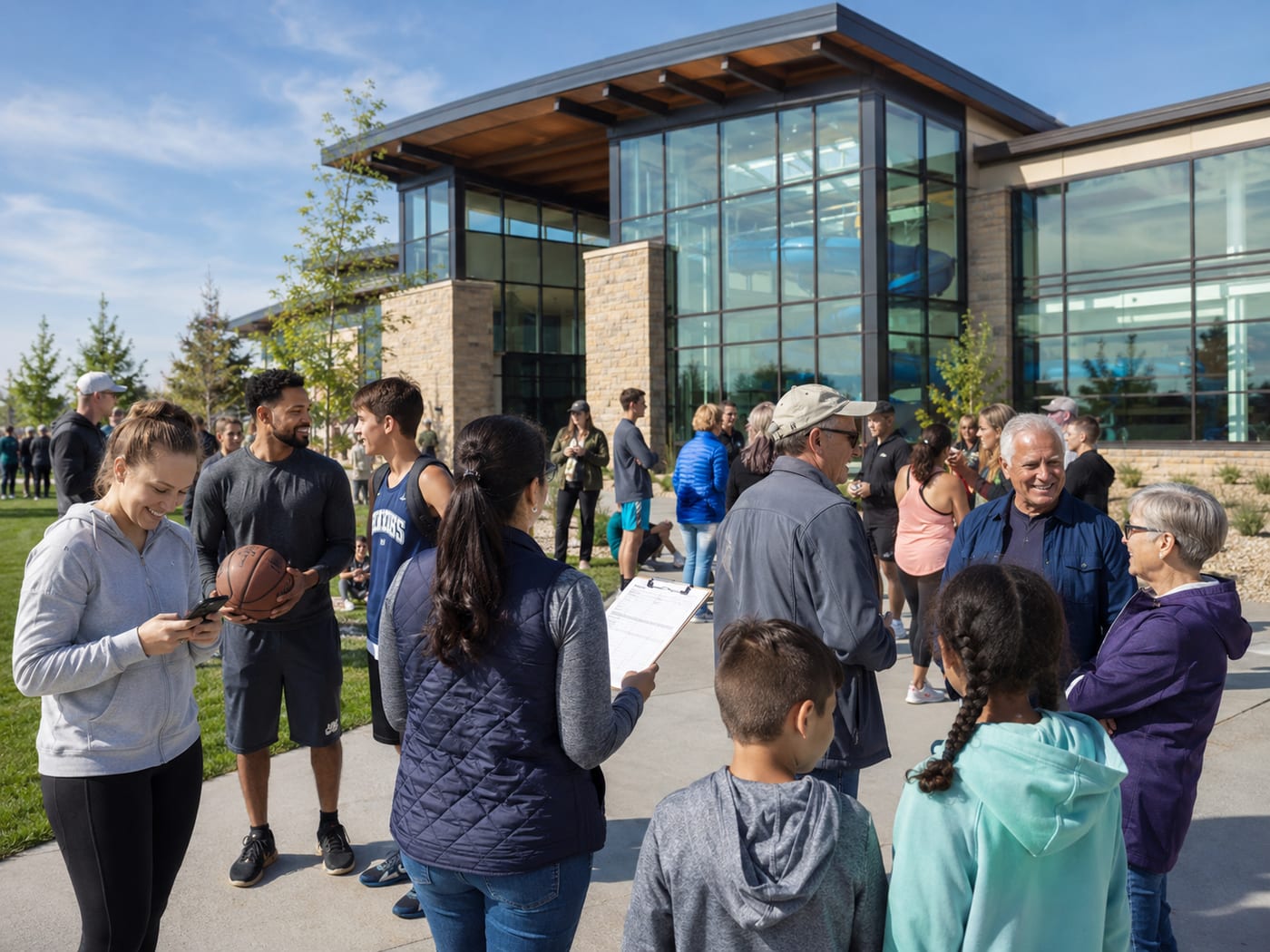
A recreation center exists to provide courts, tracks, fitness equipment, group fitness classes, youth programming, senior wellness, adaptive recreation, tournament hosting, community event space, summer camps, birthday parties, drop-in open play, and a climbing wall to every resident in the city, all on one membership that covers the entire family.
Those are two different things. They look different, they serve different populations, and they generate different outcomes for the community. Here is how.
What a private gym offers
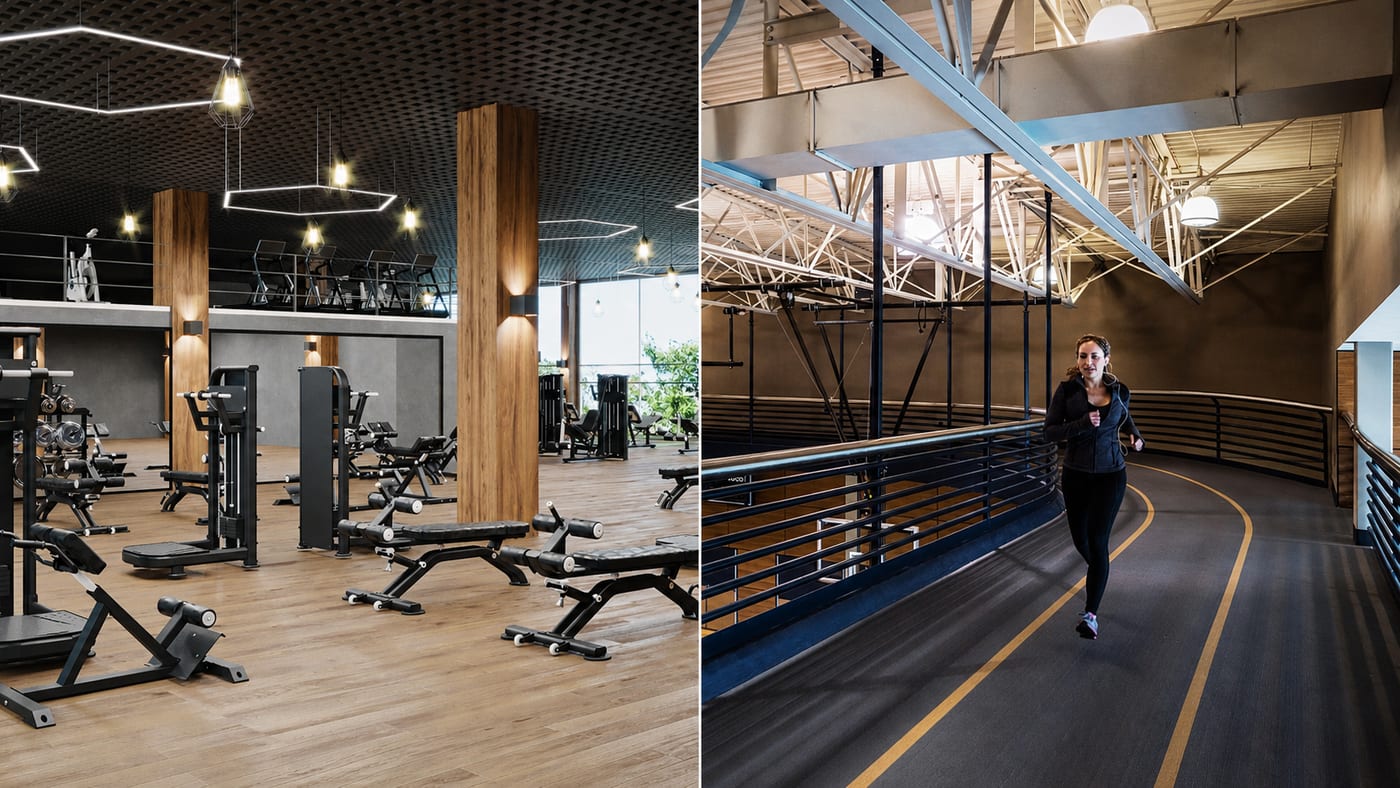
A typical private gym in Twin Falls provides some combination of the following: cardio machines (treadmills, ellipticals, stationary bikes), weight machines, free weights, and in some cases group fitness classes, personal training, and locker rooms.
Some offer more. Some offer less. The pricing typically runs $40 to $80 per person per month, depending on the facility and the membership tier. Classes may be included or may carry an additional fee. Personal training is always extra.
The membership covers one adult. A second adult in the household pays a separate membership. Children are not included. There are no courts. There is no track. There is no youth programming, no summer camp, no after-school access, no birthday party hosting, no climbing wall, and no community event space.
This is not a criticism. Private gyms are designed to serve individual adult fitness efficiently and profitably. They do exactly what they are built to do.
What a recreation center offers
A recreation center includes everything a private gym fitness center offers (cardio, weights, group fitness) plus everything a private gym does not:
Courts. Basketball, volleyball, futsal, badminton, dodgeball. A multi-court gymnasium where leagues play, tournaments are hosted, pickup games form, and kids play after school. No private gym in Twin Falls has this.
Dedicated pickleball courts. The fastest-growing sport in America with 19.8 million players. Permanent courts that operate independently from the gymnasium. No private gym in Twin Falls has this.
Indoor track. A 1/6-mile walking and running surface available every day of the year regardless of weather. The most consistently used feature at every rec center that has one, especially by seniors. No private gym in Twin Falls has this.
Climbing wall. Youth programming, birthday parties, after-school activity, summer camp rotation. The feature that makes a 9-year-old beg to come back. No private gym in Twin Falls has this.
Youth programming. Martial arts classes, cheer and dance, sports leagues, skills clinics, and summer camps running 14 weeks of school breaks per year. No private gym in Twin Falls has this.
After-school access. Open gym from 3 to 6 p.m. for kids who need somewhere safe and active between school and when parents get off work. No private gym in Twin Falls has this.
Senior wellness area. Dedicated space for older adult programming: evidence-based fitness, fall prevention, balance training, and the social connection that reduces isolation. No private gym in Twin Falls offers this at this level.
Adaptive recreation. Programming for residents with disabilities: wheelchair-accessible courts, sensory-friendly programming, adaptive fitness equipment. ADA compliance is a legal requirement for public facilities but not for many private ones. No private gym in Twin Falls offers dedicated adaptive programming.
Multipurpose rooms. Church groups, corporate events, community meetings, health fairs, dance classes, table tennis, martial arts. Rentable space that serves organizations and families across the entire community. No private gym in Twin Falls has this.
Birthday parties and event hosting. Climbing wall parties, gym parties, pool parties, multipurpose room rentals for $75 to $200. No private gym in Twin Falls offers this.
Aquatics. Lap swimming, swim lessons, water aerobics, therapeutic water access, adaptive aquatics. If the facility includes a pool, it provides year-round aquatic access that Twin Falls' seasonal outdoor pool cannot. No private gym in Twin Falls has this.
The list is long because the difference is large.
The membership comparison
This is where the contrast becomes most concrete for Twin Falls families.
Private gym: $40 to $80 per month. Covers one adult. Equipment and possibly classes. No courts, no track, no youth programming, no family coverage.
Recreation center family membership: One flat monthly rate. Covers two adults and all dependent children. Includes the fitness center, all group fitness classes, the indoor track, all courts, open gym, the climbing wall, after-school access for kids, and reduced rates on camps and programs.
A household with two adults currently paying $65 each for private gym memberships spends $1,560 per year. That covers two people and equipment access.
A recreation center family membership covers every person in the household and every feature in the building. The per-person value is not comparable. It is a different category of offering.
This is why families switch when a rec center opens: not because the fitness center is better than the private gym (it may or may not be), but because the membership covers so much more that the total household cost goes down while the total household access goes up.
What happens to private gyms when a rec center opens
This is the concern that local gym owners and their members raise, and it deserves an honest answer.
The evidence from comparable cities is consistent: private gyms and public recreation centers coexist. They serve different customer bases with different value propositions.
Private gyms serve individual adults who want a focused fitness experience: newer equipment, smaller crowds, specialized training, boutique class formats, premium amenities, or a specific gym culture that a public facility does not replicate. Many adults prefer a private gym environment and will continue to pay for it regardless of whether a rec center exists.
A recreation center serves families who want one membership covering everyone. It serves seniors who need evidence-based wellness programming in a dedicated space. It serves youth who need courts, camps, and after-school access. It serves residents with disabilities who need adaptive programming. It serves community organizations that need affordable event space.
These customer bases overlap slightly but diverge significantly. The adult who chooses a private gym for its atmosphere, equipment quality, or class specialization is not the same customer as the family that joins a rec center because one membership covers basketball for the teenager, yoga for the mom, the track for the grandparents, and summer camp for the 8-year-old.
Nampa has had a recreation center for over 30 years. Nampa also has private gyms. Both operate. Pocatello, Idaho Falls, Meridian: same pattern. The rec center does not eliminate private gyms. It serves the population that private gyms were never designed to serve.
Who a rec center serves that a private gym cannot
The clearest way to see the difference is to look at the people who cannot be served by a private gym at any price.
The 10-year-old who needs somewhere to go after school. A private gym does not allow unaccompanied minors. A rec center has open gym from 3 to 6 p.m. with staff supervision.
The family that needs summer childcare. A private gym does not run week-long day camps with sport clinics, climbing wall sessions, and supervised activity from 7 a.m. to 6 p.m. A rec center does, at $75 to $150 per week.
The 72-year-old who needs fall prevention programming. A private gym has treadmills. A rec center has structured senior classes taught by instructors trained in older adult physiology, scheduled at times that work for retirees, in a space designed for their needs.
The wheelchair user who wants to play a sport. A private gym may have an accessible entrance. A rec center has adaptive programming: wheelchair basketball, adaptive swimming, seated fitness, and facilities built to ADA standards throughout.
The church group that needs Wednesday night space. A private gym does not rent rooms to community organizations. A rec center's multipurpose rooms are available for exactly this.
The parent who wants to exercise while their kid climbs. A private gym has no climbing wall, no supervised youth space, and no way for a parent and child to use the same facility for different purposes simultaneously. A rec center is designed for exactly this.
The visiting basketball team that needs a tournament venue. A private gym does not have a multi-court gymnasium. A rec center does, and the tournament it hosts brings hotel rooms, restaurant meals, and tax revenue into the Twin Falls economy.
None of these people are served by a private gym. All of them are served by a recreation center. That is the difference.
Where the conversation stands
A recreation center committee within the Twin Falls Parks and Recreation Department has been studying this question since 2017. In June 2025, the City Council voted to advance the long-stalled feasibility study. Parks and Recreation Director Wendy Davis said the council's vote "breathed a little bit of life into what I thought was a dying initiative."
A grassroots advocacy campaign has proposed naming a potential facility after U.S. Army Specialist Troy Carlin Linden, a soldier with the 54th Engineer Battalion who was killed in action on July 8, 2006, in Ar Ramadi, Iraq. The proposal comes from a Twin Falls resident who served in the same unit.
Closing
Twin Falls has gyms. They serve individual adult fitness. They do it well. Nobody is suggesting they should close or that they do a bad job.
But a gym is not a rec center. A gym does not have courts, a track, a climbing wall, youth programming, summer camps, after-school access, senior wellness, adaptive recreation, community event space, birthday party hosting, or a family membership that covers everyone under one roof.
The question "don't we already have gyms" assumes that a rec center is a bigger gym. It is not. It is a different kind of facility serving a different set of needs for a different cross-section of the community. Every comparable Idaho city has figured this out. They have private gyms and they have a public recreation center. Both operate. Both serve their purpose. Neither replaces the other.
Twin Falls has one. It is missing the other. That is the gap 36 blog posts have been documenting, and it is the gap that only a recreation center can close.
Frequently Asked Questions
Will a rec center put local gyms out of business?
No. In every comparable Idaho city (Nampa, Pocatello, Idaho Falls, Meridian), private gyms and public recreation centers coexist. They serve different customer bases: private gyms serve individual adult fitness, while rec centers serve families, seniors, youth, and the broader community with courts, programming, and event space.
What does a rec center have that a private gym doesn't?
Courts (basketball, volleyball, pickleball), an indoor track, a climbing wall, youth programming, after-school access, summer camps, senior wellness programming, adaptive recreation, multipurpose rooms for community events, birthday party hosting, and a family membership covering every household member.
Is the fitness center in a rec center as good as a private gym?
Rec center fitness centers include cardio equipment, weight machines, and free weights comparable to private gyms. Some private gyms invest in newer or more specialized equipment. The rec center's advantage is that fitness is one feature among many, all covered by a single family membership.
How does the cost compare?
A private gym membership runs $40 to $80 per person per month. A rec center family membership covers two adults and all children for one flat rate and includes the fitness center, all group fitness classes, courts, track, climbing wall, after-school access, and more.
Is Twin Falls actively considering a recreation center?
A city committee has been studying the question since 2017. In June 2025, the City Council voted to advance the feasibility process. No specific site, cost, or funding mechanism has been finalized as of this writing.
Where can residents follow the conversation?
Twin Falls City Council meetings are open to the public, and the Parks and Recreation Department posts updates on the city's official website. A community advocacy group is also tracking the issue at twinfallsreccenter.com.