Rec Center
Tres resultados de salud. Un solo edificio. La evidencia es clara.
En resumen: El CDC estima que la inactividad física le cuesta a Estados Unidos 192 mil millones de dólares al año en gastos médicos. El Cirujano General identificó el aislamiento social como una crisis de salud pública con riesgos de mortalidad comparables a fumar 15 cigarrillos al día. Idaho ha designado la salud del comportamiento como prioridad estatal de salud pública. Twin Falls tiene 57,325 habitantes, 8,967 de ellos mayores de 65 años, un estimado de 7,700 con discapacidades, y ninguna instalación pública techada donde cualquiera de ellos pueda hacer ejercicio, socializar o acceder a programación estructurada de bienestar durante todo el año. Un centro recreativo no resuelve todos los problemas de salud de una comunidad. Pero la evidencia de décadas de investigación es constante: mejora los tres resultados que más importan: la salud física, la salud mental y la conexión social.
Treinta y siete publicaciones de esta serie han presentado los argumentos a favor de un centro recreativo en Twin Falls desde todos los ángulos: economía, torneos, deportes juveniles, bienestar de los adultos mayores, acceso para personas con discapacidad, diseño de la instalación, financiamiento, y uso comunitario diario.
Esta publicación se aleja de los argumentos individuales y hace una pregunta más sencilla: ¿qué dice realmente la investigación en salud sobre lo que sucede cuando una comunidad construye un centro recreativo?
La respuesta no es complicada. Está documentada, medida y es constante a lo largo de décadas de evidencia. Un centro recreativo mejora la salud física, la salud mental y la conexión social. Esos tres resultados interactúan entre sí y se refuerzan mutuamente. Y Twin Falls actualmente no tiene ninguna instalación pública que ofrezca alguno de ellos a gran escala.
La evidencia sobre la salud física
La relación entre el acceso a instalaciones recreativas y la actividad física no es una teoría. Es uno de los hallazgos más replicados en la investigación de salud pública.
Los Centros para el Control y la Prevención de Enfermedades han documentado que la actividad física regular reduce el riesgo de enfermedades del corazón, diabetes tipo 2, varios tipos de cáncer, demencia y ansiedad. Mejora la salud ósea, la salud cerebral y el control del peso. Reduce el riesgo de mortalidad por todas las causas. Estos no son efectos menores. Están entre los hallazgos más sólidos y constantes de la medicina preventiva.
El problema no es que la gente no sepa que el ejercicio es bueno para ella. El problema es el acceso. El CDC ha encontrado de manera constante que el acceso a instalaciones recreativas es uno de los indicadores más sólidos de si la gente realmente hace ejercicio. Cuando las instalaciones existen y son accesibles, la gente las usa. Cuando no existen, la gente hace menos ejercicio sin importar qué tan motivada se sienta.
El costo de la inactividad física tampoco es abstracto. El CDC estima que la inactividad física le cuesta a Estados Unidos 192 mil millones de dólares al año en gastos médicos. Esa cifra incluye hospitalizaciones, manejo de enfermedades crónicas y pérdida de productividad que podrían prevenirse o reducirse con actividad física regular.
Twin Falls tiene gimnasios privados que atienden el acondicionamiento físico individual de los adultos. Lo que no tiene es una instalación pública donde una persona de 72 años pueda caminar en una pista techada, un niño de 10 años pueda jugar básquetbol después de la escuela, un padre o madre pueda tomar una clase de yoga mientras su hijo usa el muro de escalada, y una persona en silla de ruedas pueda acceder a acondicionamiento físico adaptado, todo con una sola membresía familiar, durante todo el año, sin importar los ingresos.
La comparación con un gimnasio privado importa aquí. Un gimnasio privado de 40 a 80 dólares al mes por persona atiende a los adultos que pueden pagarlo. Un centro recreativo con membresía familiar atiende a todos los integrantes del hogar. Los beneficios de salud de la actividad física no llegan a la comunidad si la instalación solo atiende a un grupo demográfico a precios de mercado.
La evidencia sobre la salud mental
Idaho ha designado la salud del comportamiento como prioridad estatal de salud pública. Esa designación no se hizo a la ligera. Refleja resultados que son medibles y preocupantes.
El blog sobre salud mental de esta serie documentó la investigación en detalle: NAMI estima que más de 109,000 adultos en Idaho tienen necesidades de salud mental no atendidas. La investigación nacional relaciona la actividad física regular con una reducción del 26 por ciento en los síntomas de ansiedad y reducciones significativas de la depresión en todos los grupos de edad.
El mecanismo es sencillo. La actividad física desencadena cambios neuroquímicos (endorfinas, serotonina, dopamina) que mejoran directamente el estado de ánimo, reducen el estrés y alivian los síntomas de ansiedad y depresión. Estos no son efectos placebo. Son respuestas biológicas medibles que ocurren de manera confiable con actividad física constante.
Pero el beneficio para la salud mental de un centro recreativo no se limita al ejercicio en sí. Incluye el entorno. Una persona que hace ejercicio sola en casa obtiene parte del beneficio neuroquímico. Una persona que hace ejercicio en una clase de acondicionamiento físico en grupo, juega básquetbol informal o camina en la pista techada junto a otras personas habituales obtiene el beneficio neuroquímico más el beneficio social. La combinación es más eficaz que cualquiera de los dos por separado.
Para los 8,967 habitantes de Twin Falls mayores de 65 años, esta combinación es especialmente crucial. La investigación muestra de manera constante que la actividad física combinada con la participación social produce los mejores resultados de salud mental para los adultos mayores. Un adulto mayor que camina solo en la pista se beneficia. Un adulto mayor que camina en la pista tres mañanas a la semana junto a personas que saben su nombre se beneficia más. El grupo de caminata del martes por la mañana no es solo ejercicio. Es infraestructura de salud mental comunitaria.
La evidencia sobre la conexión social
En 2023, el Cirujano General de Estados Unidos, el Dr. Vivek Murthy, emitió un informe sobre la epidemia de soledad y aislamiento en Estados Unidos. El informe identificó la desconexión social como una crisis de salud pública con consecuencias comparables a factores de riesgo bien establecidos.
Los hallazgos fueron contundentes. La soledad y el aislamiento social aumentan el riesgo de muerte prematura en un 26 por ciento y un 29 por ciento respectivamente. El impacto en la mortalidad de una mala conexión social es comparable a fumar hasta 15 cigarrillos al día y supera los riesgos asociados con la inactividad física, la obesidad y el consumo excesivo de alcohol.
La primera recomendación del Cirujano General para enfrentar la crisis fue fortalecer la infraestructura social: los espacios físicos, programas e instituciones que reúnen a las personas para realizar actividades e interactuar en conjunto.
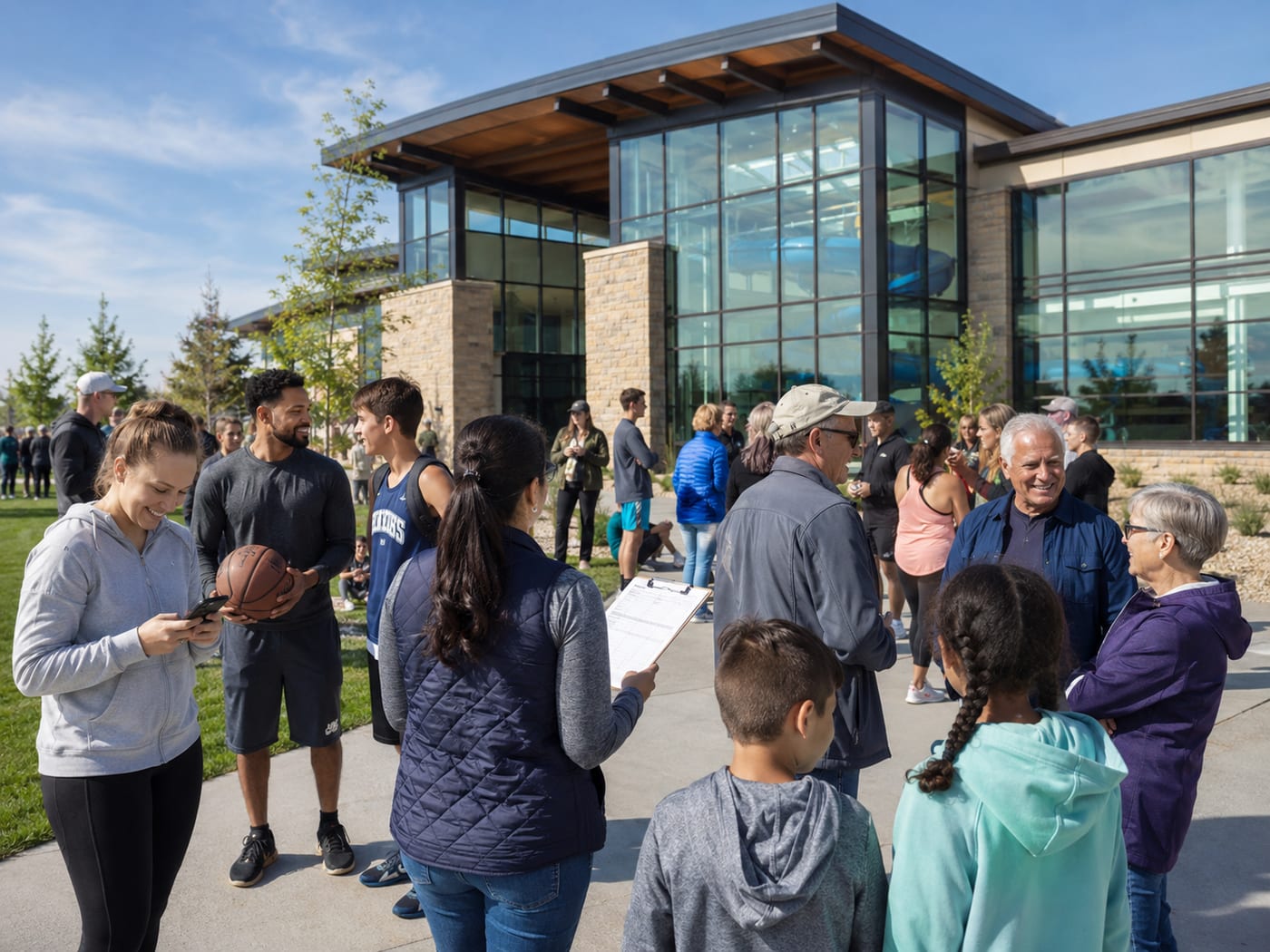
Un centro recreativo es infraestructura social. Eso no es una metáfora. Es una descripción literal de lo que hace el edificio.
Una sesión de tenis de mesa el martes por la noche reúne a 14 desconocidos que se vuelven habituales y luego amigos. Una liga de quemados los jueves crea un compromiso social semanal que hace que los adultos salgan de casa. Una clase de tai chi para adultos mayores se convierte en una comunidad donde los participantes notan cuando alguien falta. Un grupo de yoga de las 6 a. m. se convierte en el círculo social que una mamá trabajadora no tuvo tiempo de formar de ninguna otra manera.
Ninguna de estas conexiones requiere un programa formal. Suceden porque el edificio está ahí, la gente se presenta y la cercanía habitual crea relaciones. El informe del Cirujano General llamó a esto "contacto social incidental", e identificó la desaparición de los espacios que lo generan como uno de los principales motores de la epidemia de soledad.
Twin Falls tiene parques para el verano. Tiene iglesias para el domingo. Tiene restaurantes para las comidas. Lo que no tiene es un espacio público techado donde personas de todas las edades acudan con regularidad, vean las mismas caras y construyan ese tipo de conexiones sociales de poco esfuerzo que la investigación identifica como las más protectoras contra el aislamiento.
Un centro recreativo es ese espacio.
Los tres resultados se refuerzan entre sí
La salud física, la salud mental y la conexión social no son tres beneficios separados. Son tres caras del mismo resultado, y cada una fortalece a las demás.
Un adulto mayor que camina en la pista techada tres mañanas a la semana mejora su salud cardiovascular (física). La rutina reduce su ansiedad y mejora su estado de ánimo (mental). Las personas que ve en la pista se convierten en caras conocidas que lo saludan, platican con él y notan su presencia (social). Si deja de ir, los beneficios de salud disminuyen, el ánimo se oscurece y las conexiones sociales se desvanecen. Si sigue yendo, los tres se acumulan.
Un adolescente que juega básquetbol informal después de la escuela hace ejercicio (física), libera el estrés y la inquietud del día escolar (mental) y forma amistades con chicos de otras escuelas que de otro modo nunca conocería (social).
Un padre o madre que asiste a una clase de acondicionamiento físico en grupo tres mañanas a la semana se vuelve más fuerte (física), duerme mejor y se siente menos abrumado (mental), y gana un círculo social de adultos que comparten el mismo horario de las 6 a. m. (social).
El centro recreativo no genera estos resultados a través de un programa de bienestar o una iniciativa de salud. Los genera a través de la cercanía, la rutina y una puerta abierta. El edificio crea las condiciones. La gente crea los resultados.
Lo que Twin Falls tiene actualmente
Twin Falls tiene gimnasios privados que atienden el acondicionamiento físico individual de los adultos a un costo de 40 a 80 dólares al mes por persona. Tiene parques al aire libre que son accesibles aproximadamente siete meses del año. Tiene el Senior Center en Shoshone Street, que ofrece programación social pero no fue diseñado como una instalación de bienestar. Tiene gimnasios escolares que están disponibles de manera inconsistente y principalmente para actividades organizadas.
Lo que no tiene es una instalación pública techada que atienda los tres resultados de salud (física, mental, social) para todas las poblaciones (jóvenes, adultos, adultos mayores, residentes con discapacidad) a un precio accesible, durante todo el año, sin importar el clima.
Jerome tiene uno para 13,000 personas. Nampa tiene uno para 115,000 personas. Pocatello tiene uno. Idaho Falls tiene uno. Meridian tiene uno. Twin Falls, con 57,325 habitantes, no tiene.
La investigación sobre resultados de salud no cambia según el tamaño de la ciudad. Los datos del CDC aplican en Twin Falls igual que aplican en todos los demás lugares. El informe del Cirujano General no exceptuó a las ciudades medianas de Idaho. La inactividad física, el aislamiento social y las condiciones de salud mental no tratadas producen las mismas consecuencias en Twin Falls que producen a nivel nacional.
La diferencia es el acceso. Las ciudades con centros recreativos les dan a sus residentes una herramienta para atender los tres. Twin Falls no lo hace.
En qué punto está la conversación
Un comité para el centro recreativo dentro del Departamento de Parques y Recreación de Twin Falls ha estado estudiando esta cuestión desde 2017. En junio de 2025, el Concejo Municipal votó a favor de avanzar con el estudio de factibilidad que llevaba mucho tiempo estancado. La directora de Parques y Recreación, Wendy Davis, dijo que la votación del concejo "le devolvió un poco de vida a lo que yo pensaba que era una iniciativa moribunda".
Una campaña de defensa ciudadana ha propuesto nombrar una posible instalación en honor al Especialista del Ejército de Estados Unidos Troy Carlin Linden, un soldado del 54.º Batallón de Ingenieros que murió en combate el 8 de julio de 2006 en Ar Ramadi, Irak. La propuesta proviene de un residente de Twin Falls que sirvió en la misma unidad.
Cierre
Los argumentos de salud a favor de un centro recreativo no son un solo argumento. Son tres argumentos que se refuerzan entre sí y que la investigación ha medido de manera constante durante décadas.
La actividad física reduce las enfermedades crónicas, previene las caídas en los adultos mayores y disminuye los costos de atención médica. El CDC dice que el acceso a instalaciones es uno de los indicadores más sólidos de si la gente realmente hace ejercicio.
La salud mental mejora con la actividad física regular. Idaho ha designado la salud del comportamiento como prioridad estatal. Más de 109,000 adultos en Idaho tienen necesidades de salud mental no atendidas. El ejercicio reduce los síntomas de ansiedad en un 26 por ciento.
La conexión social reduce la muerte prematura entre un 26 y un 29 por ciento. El Cirujano General la llama una epidemia. El informe recomienda construir exactamente el tipo de infraestructura social que ofrece un centro recreativo.
Un centro recreativo genera los tres. No a través de un programa o una campaña. A través de un edificio que está abierto, es accesible y está disponible para todos los residentes de la comunidad. El adulto mayor que camina en la pista. El adolescente que juega básquetbol informal. El padre o madre que encuentra una comunidad de yoga a las 6 a. m. La persona que solo necesitaba una razón para salir de casa.
Twin Falls tiene 57,325 habitantes que se beneficiarían. No tiene ninguna instalación que genere estos resultados. La evidencia de salud no es nueva. Ha sido constante durante décadas. Lo que falta es el edificio.
Preguntas frecuentes
¿Qué dice el CDC sobre las instalaciones recreativas y la salud?
El CDC ha encontrado de manera constante que el acceso a instalaciones recreativas es uno de los indicadores más sólidos de los niveles de actividad física en una comunidad. La actividad física regular reduce el riesgo de enfermedades del corazón, diabetes, cáncer, demencia y ansiedad. La inactividad física le cuesta a Estados Unidos un estimado de 192 mil millones de dólares al año en gastos médicos.
¿Cómo ayuda un centro recreativo a la salud mental?
La actividad física desencadena cambios neuroquímicos que reducen la ansiedad (en un 26 por ciento según estudios), mejoran el estado de ánimo y alivian la depresión. Un centro recreativo agrega una dimensión social al ejercicio que amplifica estos beneficios. El acondicionamiento físico en grupo, los partidos informales y las rutinas regulares crean conexiones que mejoran los resultados de salud mental más allá de lo que ofrece el ejercicio en solitario.
¿Qué dijo el Cirujano General sobre la soledad?
El informe de 2023 identificó la desconexión social como una crisis de salud pública. La soledad aumenta el riesgo de muerte prematura en un 26 por ciento. El impacto en la mortalidad es comparable a fumar 15 cigarrillos al día. La primera recomendación del Cirujano General fue fortalecer la infraestructura social, que incluye instalaciones como los centros recreativos.
¿Tiene Twin Falls un problema de salud mental?
Idaho ha designado la salud del comportamiento como prioridad estatal de salud pública. NAMI estima que más de 109,000 adultos en Idaho tienen necesidades de salud mental no atendidas. Un centro recreativo no reemplaza los servicios clínicos de salud mental, pero la actividad física y la conexión social son dos de las herramientas basadas en evidencia más sólidas para mejorar los resultados de salud mental de la comunidad.
¿Cómo se conectan los tres beneficios de salud?
La salud física, la salud mental y la conexión social se refuerzan entre sí. Una persona que hace ejercicio con regularidad en un entorno social (una clase de acondicionamiento físico, un grupo de caminata, un partido informal) mejora los tres al mismo tiempo. Cada resultado fortalece a los demás. Un centro recreativo crea las condiciones para los tres a través de la rutina, la cercanía y una puerta abierta.
¿Está Twin Falls considerando activamente un centro recreativo?
Un comité municipal ha estado estudiando la cuestión desde 2017. En junio de 2025, el Concejo Municipal votó a favor de avanzar con el proceso de factibilidad. Al momento de escribir esto, no se ha definido ningún sitio, costo ni mecanismo de financiamiento específico.
¿Dónde pueden los residentes seguir la conversación?
Las reuniones del Concejo Municipal de Twin Falls están abiertas al público, y el Departamento de Parques y Recreación publica actualizaciones en el sitio web oficial de la ciudad. Un grupo comunitario de defensa también da seguimiento al tema en twinfallsreccenter.com.