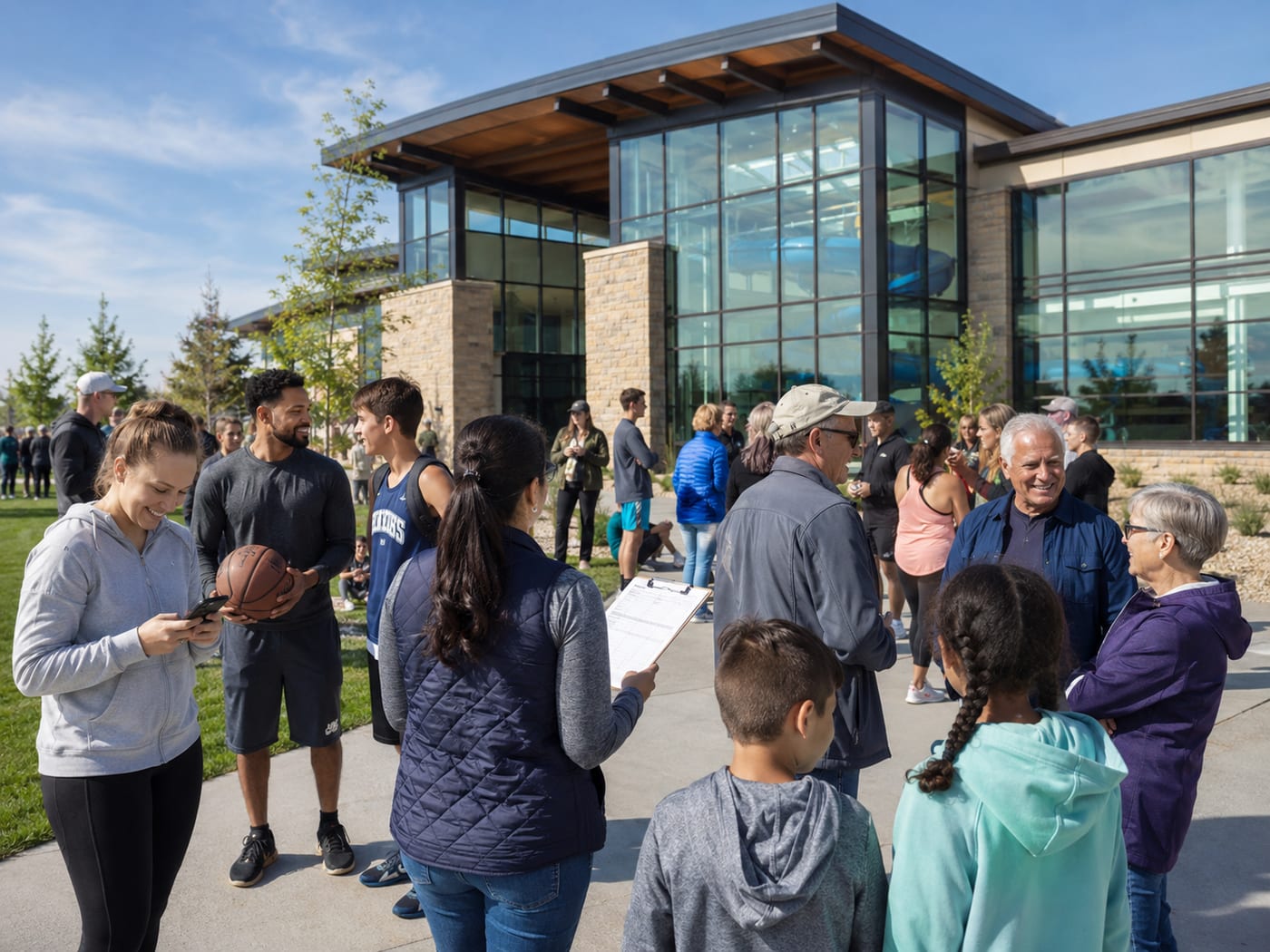
Rec Center
Jerome construyó un centro recreativo para 13,000 personas. Twin Falls no tiene nada.
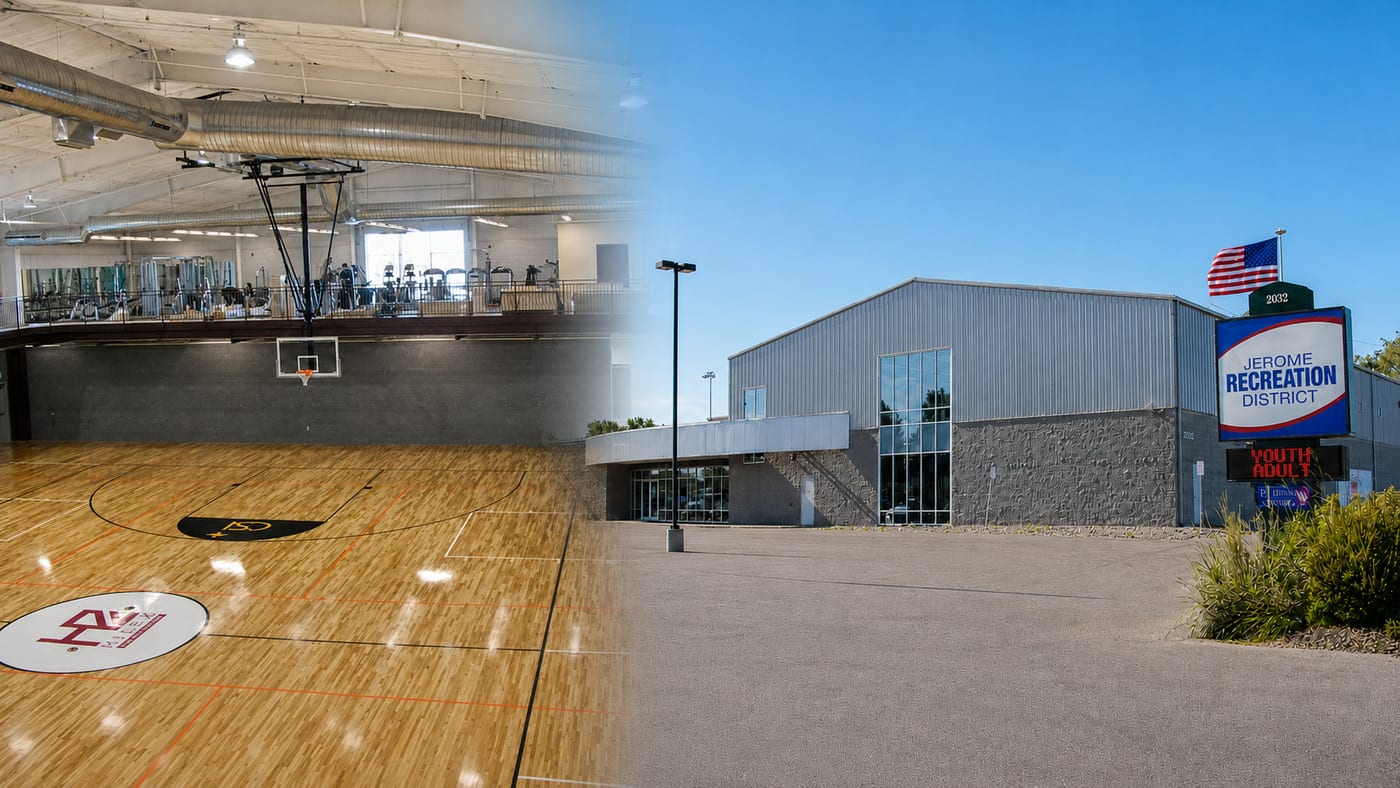
En resumen: A veinte millas al norte de Twin Falls, Jerome opera un centro recreativo de 32,000 pies cuadrados con dos gimnasios, un centro de acondicionamiento físico, una pista para caminar, una alberca al aire libre, deportes juveniles, ligas para adultos, programación para adultos mayores y educación física para niños que estudian en casa. Una membresía familiar cuesta $44.66 al mes. Una membresía para adultos mayores cuesta $14.18. Una entrada por día cuesta $4. El centro de acondicionamiento físico opera con una recuperación de costos que supera el 100 por ciento, y los ingresos del gimnasio cubren el déficit estacional de la alberca. Jerome atiende a 13,000 residentes. Twin Falls tiene más de cuatro veces esa población y ninguna instalación pública comparable. Las familias de Twin Falls ya manejan hasta Jerome para tener una recreación que su propia ciudad no puede ofrecer.
El estudio de caso de Nampa demostró que un centro recreativo puede sostenerse por sí mismo durante 30 años en Idaho sin subsidio de los contribuyentes. Nampa está a 130 millas de Twin Falls. El viaje toma dos horas. El modelo está comprobado, pero está lejos.
Jerome no está lejos. Está a 20 millas por la Carretera 93. El viaje toma 20 minutos. Y el centro recreativo de Jerome no es un modelo teórico. Es la instalación que las familias de Twin Falls ya usan porque su propia ciudad no tiene nada que ofrecer.
Lo que Jerome construyó
El Distrito Recreativo de Jerome opera una instalación de 32,000 pies cuadrados en el 2032 de South Lincoln Avenue. El edificio incluye dos gimnasios, un centro de acondicionamiento físico con equipo cardiovascular y de pesas, una pista techada para caminar y acceso a una alberca al aire libre y una alberca poco profunda que operan por temporada, de junio a agosto.
La instalación no es nueva. Lleva años sirviendo a la comunidad de Jerome, operando como un distrito recreativo especial gobernado por una junta electa, independiente de la Ciudad de Jerome. Su presupuesto anual está disponible al público a través del sitio web del distrito.
Jerome tiene aproximadamente 13,000 residentes. La instalación atiende a esa población con programación diaria, deportes juveniles y para adultos, clases de acondicionamiento físico y eventos comunitarios. No es un lujo construido para una comunidad adinerada. Es infraestructura recreativa básica construida para una pequeña ciudad de Idaho que decidió que sus residentes la merecían.
Lo que cuesta usarlo
Los precios de las membresías de Jerome están publicados en su sitio web y demuestran cómo se ve en la práctica una recreación pública accesible.
Tipo de membresía | Costo mensual (residente) |
|---|---|
Individual | $22.33 |
Pareja | $39.70 |
Familiar (pareja + dependientes menores de 19 años) | $44.66 |
Jóvenes (13-17) | $14.89 |
Adultos mayores (55+) | $14.18 |
Solo pista para caminar | $7.14 |
Las tarifas diarias son aún más sencillas: $4 para adultos, $3 para jóvenes, $2 para adultos mayores, $2.50 solo para la pista para caminar o el gimnasio de uso libre.
Los no residentes son bienvenidos a tarifas ligeramente más altas, aproximadamente $10 más por año. Eso significa que las familias de Twin Falls que manejan hasta Jerome para la recreación pagan solo un poco más que los residentes de Jerome por acceso completo.
Para poner esto en contexto, una membresía familiar en el centro recreativo de Jerome cuesta $44.66 al mes y cubre a dos adultos y a todos los dependientes menores de 19 años con acceso ilimitado al centro de acondicionamiento físico, al equipo, a la pista para caminar y al gimnasio de uso libre. Una membresía individual para un solo adulto en un gimnasio privado en Twin Falls cuesta entre $40 y $80 al mes y cubre a una sola persona con acceso únicamente al equipo.
La comparación de valor ni siquiera se acerca.
Lo que sucede adentro cada semana
El centro recreativo de Jerome no es un edificio con equipo que permanece inactivo. Ofrece programación activa entre distintos grupos de edad, temporadas e intereses. Esto es lo que muestra el horario actual.
Programación juvenil. Las clases de taekwondo juvenil se imparten regularmente. La educación física para niños que estudian en casa les da a estas familias una educación física estructurada durante las horas de entre semana cuando la instalación está más tranquila. Las opciones de verano incluyen campamentos de básquetbol, campamentos de futbol a través de Challenger Sports, clínicas de tenis y clases de gimnasia acrobática. La inscripción a los deportes juveniles de otoño abre cada verano.
Programación para adultos. Las ligas de softbol para adultos se juegan durante la temporada de verano. Las ligas de softbol de un solo lanzamiento ofrecen una opción recreativa relajada para los adultos que quieren jugar sin un compromiso competitivo tan exigente.
Programación para adultos mayores. "Over 60 and Getting Fit" es un programa dedicado a los adultos mayores. CSI Forever Fit funciona a través de una colaboración con el College of Southern Idaho. Estos programas ofrecen exactamente el tipo de bienestar estructurado para adultos mayores que, según las investigaciones, reduce el riesgo de caídas, las enfermedades crónicas y el aislamiento en los adultos mayores.
Clases de acondicionamiento físico en grupo. Los niveles de membresía Silver Plus y Gold Plus incluyen acceso ilimitado a las clases de acondicionamiento físico, ofreciendo el mismo tipo de programación de acondicionamiento físico en grupo que impulsa la retención de membresías de adultos en cada centro recreativo.
Eventos comunitarios. El distrito recreativo de Jerome organiza noches de camiones de comida y música en vivo, búsquedas del tesoro, eventos de Parks After Dark y un evento de Mudapalooza. Estos no son programas de acondicionamiento físico. Son actividades que fortalecen a la comunidad y hacen del distrito recreativo una institución cívica, no solo un gimnasio.
Esta es una instalación de 32,000 pies cuadrados en una ciudad de 13,000 habitantes que ofrece taekwondo juvenil, educación física para niños que estudian en casa, campamentos de básquetbol, campamentos de futbol, clínicas de tenis, gimnasia acrobática, softbol para adultos, acondicionamiento físico para adultos mayores, clases de ejercicio en grupo, noches de camiones de comida y eventos comunitarios. Hace todo esto con un presupuesto público que es transparente y está publicado en línea.
Cómo funcionan las finanzas
El análisis de la campaña del Centro Recreativo de Twin Falls sobre los registros financieros de Jerome cita que el centro de acondicionamiento físico opera con una recuperación de costos del 100.7 por ciento. Eso significa que el centro de acondicionamiento físico genera un poco más de ingresos de lo que cuesta operarlo.
La alberca al aire libre, que funciona por temporada de junio a agosto, opera con déficit. Esto es normal. Cada alberca pública en Estados Unidos opera con déficit porque las albercas son caras de operar, calentar, mantener y asegurar, y las instalaciones estacionales generan ingresos solo durante tres meses mientras cargan con los costos todo el año.
Pero el superávit del centro de acondicionamiento físico cubre el déficit de la alberca. El gimnasio paga por la alberca. Ese es el modelo. Y funciona en una ciudad de 13,000 personas con una instalación de 32,000 pies cuadrados y tarifas de membresía que empiezan en $14.18 al mes.
El modelo de Nampa demuestra que un centro recreativo puede sostenerse por sí mismo a gran escala (140,000 pies cuadrados, 115,000 residentes). El modelo de Jerome demuestra que puede funcionar a escala comunitaria (32,000 pies cuadrados, 13,000 residentes). Juntos, delimitan a Twin Falls (57,325 residentes) por ambos lados: el modelo funciona a mayor escala y funciona a menor escala. Twin Falls queda justo en medio.
Las familias de Twin Falls que ya lo usan
Esta es la parte de la historia de Jerome que argumenta el caso de Twin Falls de la manera más directa.
Las familias de Twin Falls ya manejan hasta Jerome para la recreación. Manejan 20 millas para usar una pista para caminar, un centro de acondicionamiento físico, canchas de gimnasio de uso libre y una alberca que su propia ciudad no ofrece. Pagan la tarifa de no residente, que es solo $10 más por año de lo que pagan los residentes de Jerome. Y lo hacen porque la alternativa en Twin Falls es un gimnasio privado a $40-80 al mes por persona, sin canchas, sin pista, sin programación juvenil y sin membresía familiar.
Una ciudad de 57,000 habitantes está enviando a sus residentes a una ciudad de 13,000 habitantes para tener recreación pública básica. Ese patrón te dice todo lo que necesitas saber sobre la brecha de infraestructura.
La instalación de Jerome se construyó para Jerome. No fue diseñada para absorber la demanda de una ciudad cuatro veces más grande. Cuando las familias de Twin Falls manejan hasta Jerome para la recreación, están usando infraestructura que su propia ciudad debería haber construido, y le están agregando tráfico y desgaste a una instalación que los 13,000 residentes de Jerome financiaron para sí mismos.
Lo que Twin Falls ganaría y que Jerome no puede ofrecer
La instalación de 32,000 pies cuadrados de Jerome es impresionante para una ciudad de su tamaño. Pero no puede hacer lo que haría una instalación a la escala de Twin Falls.
Ser sede de torneos. Los gimnasios de Jerome pueden albergar ligas locales, pero no torneos regionales de varios equipos que atraigan equipos visitantes de todo el sur de Idaho y llenen los cuartos de hotel a lo largo de Blue Lakes Boulevard. Una instalación de cuatro canchas en Twin Falls sería sede de eventos de básquetbol, voleibol, lucha olímpica, pickleball y porrismo que traen gasto externo al Magic Valley.
Canchas dedicadas de pickleball. La instalación de Jerome no tiene infraestructura permanente de pickleball. Una instalación de Twin Falls con canchas dedicadas serviría al deporte de más rápido crecimiento en Estados Unidos sin competir por el tiempo del gimnasio.
Muro de escalada. Jerome no tiene uno. Una instalación de Twin Falls con un muro de escalada serviría a la programación juvenil, a las fiestas de cumpleaños, al acceso después de la escuela y a las rotaciones de campamentos de verano.
Actividades acuáticas techadas. La alberca de Jerome es al aire libre y estacional (de junio a agosto). Una instalación de Twin Falls con actividades acuáticas techadas ofrecería acceso a la natación todo el año, cubriendo los cinco meses de invierno cuando la alberca de Jerome está cerrada y no existe ninguna opción pública en todo el Magic Valley.
Escala de programación. Jerome ofrece taekwondo juvenil y campamentos de básquetbol. Una instalación de Twin Falls de dos a cuatro veces la superficie podría ofrecer programación simultánea de artes marciales, porrismo y baile, acondicionamiento físico en grupo, eventos comunitarios y recreación de uso libre sin conflictos de horario.
Las dos instalaciones se complementarían entre sí, no competirían. Jerome seguiría sirviendo a su comunidad. Twin Falls dejaría de enviar a sus residentes 20 millas por la carretera para tener una recreación que debería ofrecer en casa.
En qué punto está la conversación
Un comité del centro recreativo dentro del Departamento de Parques y Recreación de Twin Falls ha estado estudiando esta cuestión desde 2017. En junio de 2025, el Concejo Municipal votó a favor de avanzar en el estudio de viabilidad, que llevaba mucho tiempo estancado. La directora de Parques y Recreación, Wendy Davis, dijo que el voto del concejo "le dio un poco de vida a lo que yo pensaba que era una iniciativa moribunda".
Una campaña de defensa ciudadana ha propuesto nombrar una posible instalación en honor al Especialista del Ejército de Estados Unidos Troy Carlin Linden, un soldado del 54.º Batallón de Ingenieros que murió en combate el 8 de julio de 2006 en Ar Ramadi, Irak. La propuesta viene de un residente de Twin Falls que sirvió en la misma unidad.
Cierre
Jerome no esperó a tener una población más grande para justificar un centro recreativo. No esperó a una economía perfecta ni a una subvención federal. Construyó una instalación de 32,000 pies cuadrados, la dotó de personal, la llenó de programación, le puso precios para que un adulto mayor pueda caminar en la pista por $14.18 al mes y una familia pueda usar todo el edificio por $44.66, y logró que funcionara financieramente para una ciudad de 13,000 habitantes.
Veinte millas al sur, Twin Falls tiene cuatro veces la población, cuatro veces la base tributaria y cuatro veces la demanda. No tiene ninguna instalación comparable. Sus familias manejan hasta Jerome, hasta Nampa, hasta Boise y hasta Salt Lake City para tener una recreación que su propia ciudad no puede ofrecer.
Jerome es la prueba de que el modelo funciona en una pequeña comunidad de Idaho. Nampa es la prueba de que funciona a mayor escala. Twin Falls es la ciudad entre ellas, en geografía y en población, que aún no ha construido lo que ambos de sus vecinos ya tienen.
La prueba está a 20 millas de distancia. Cuesta $44.66 al mes. Y las familias de Twin Falls ya están manejando hasta allá para usarla.
Preguntas frecuentes
¿Qué incluye el centro recreativo de Jerome?
Una instalación de 32,000 pies cuadrados con dos gimnasios, un centro de acondicionamiento físico con equipo cardiovascular y de pesas, una pista techada para caminar, y una alberca al aire libre y una alberca poco profunda que operan por temporada de junio a agosto. La programación incluye taekwondo juvenil, educación física para niños que estudian en casa, campamentos de básquetbol y de futbol, softbol para adultos, acondicionamiento físico para adultos mayores y clases de ejercicio en grupo.
¿Cuánto cuesta?
Una membresía familiar para residentes de Jerome cuesta $44.66 al mes. Las membresías individuales empiezan en $22.33. Las membresías para adultos mayores empiezan en $14.18. Las tarifas de entrada por día son $4 para adultos, $3 para jóvenes y $2 para adultos mayores. Los no residentes pagan aproximadamente $10 más por año.
¿El centro recreativo de Jerome se paga por sí mismo?
El análisis de la campaña sobre los registros financieros de Jerome cita que el centro de acondicionamiento físico opera con una recuperación de costos del 100.7 por ciento. La alberca al aire libre opera con un déficit estacional, lo cual es normal en cada alberca pública. El superávit del centro de acondicionamiento físico cubre el déficit de la alberca.
¿Pueden los residentes de Twin Falls usar la instalación de Jerome?
Sí. Hay membresías para no residentes disponibles a tarifas ligeramente más altas. Muchas familias de Twin Falls ya usan la instalación de Jerome porque Twin Falls no tiene ningún centro recreativo público comparable.
¿Un centro recreativo de Twin Falls competiría con el de Jerome?
No. Las dos instalaciones se complementarían entre sí. La instalación de 32,000 pies cuadrados de Jerome sirve a su comunidad inmediata. Una instalación de Twin Falls a mayor escala agregaría la capacidad de ser sede de torneos, canchas dedicadas de pickleball, un muro de escalada, actividades acuáticas techadas y una capacidad de programación más amplia que una instalación más pequeña no puede ofrecer.
¿Twin Falls está considerando activamente un centro recreativo?
Un comité municipal ha estado estudiando la cuestión desde 2017. En junio de 2025, el Concejo Municipal votó a favor de avanzar en el proceso de viabilidad. No se ha finalizado ningún sitio, costo ni mecanismo de financiamiento específico al momento de escribir esto.
¿Dónde pueden los residentes seguir la conversación?
Las reuniones del Concejo Municipal de Twin Falls están abiertas al público, y el Departamento de Parques y Recreación publica actualizaciones en el sitio web oficial de la ciudad. Un grupo de defensa comunitaria también le está dando seguimiento al tema en twinfallsreccenter.com.